This is a very interesting read: Transformerless Power Supplies: Resistive and Capacitive. I was referred to it by @mariush over on the EEVblog forum.
Transformerless Power Supplies
Reply

This is a very interesting read: Transformerless Power Supplies: Resistive and Capacitive. I was referred to it by @mariush over on the EEVblog forum.
Watched a video about how to implement a mains indicator: Using LEDs as mains indicator lights on 120V and 230V (live demos).
I found these cool magnets: Universal Magnetic Car Phone Holder Dashboard Hands-Free Mobile GPS Mount Stand. I didn’t buy any, but I might!
And speaking of magnetic material I should get, these look cool too: A4 Magnet Sheets Black Magnetic Mats for Refrigerator Photo and Picture Cutting Die Craft Magnets Magnetic on One Side 0.5mm.
Found this great video: The NanoVNA, a beginners guide to the Vector Network Analyzer. Good links in the description. My mate Raz says to get NanoVNAs from either here or here.
Some light reading: Dielectric loss.
Today is the first day I have used my signal generator, my scope, and a breadboarded circuit, at the same time. Used my multi-meter with its new cables too!
Thanks to my friend Raz for his help. <3
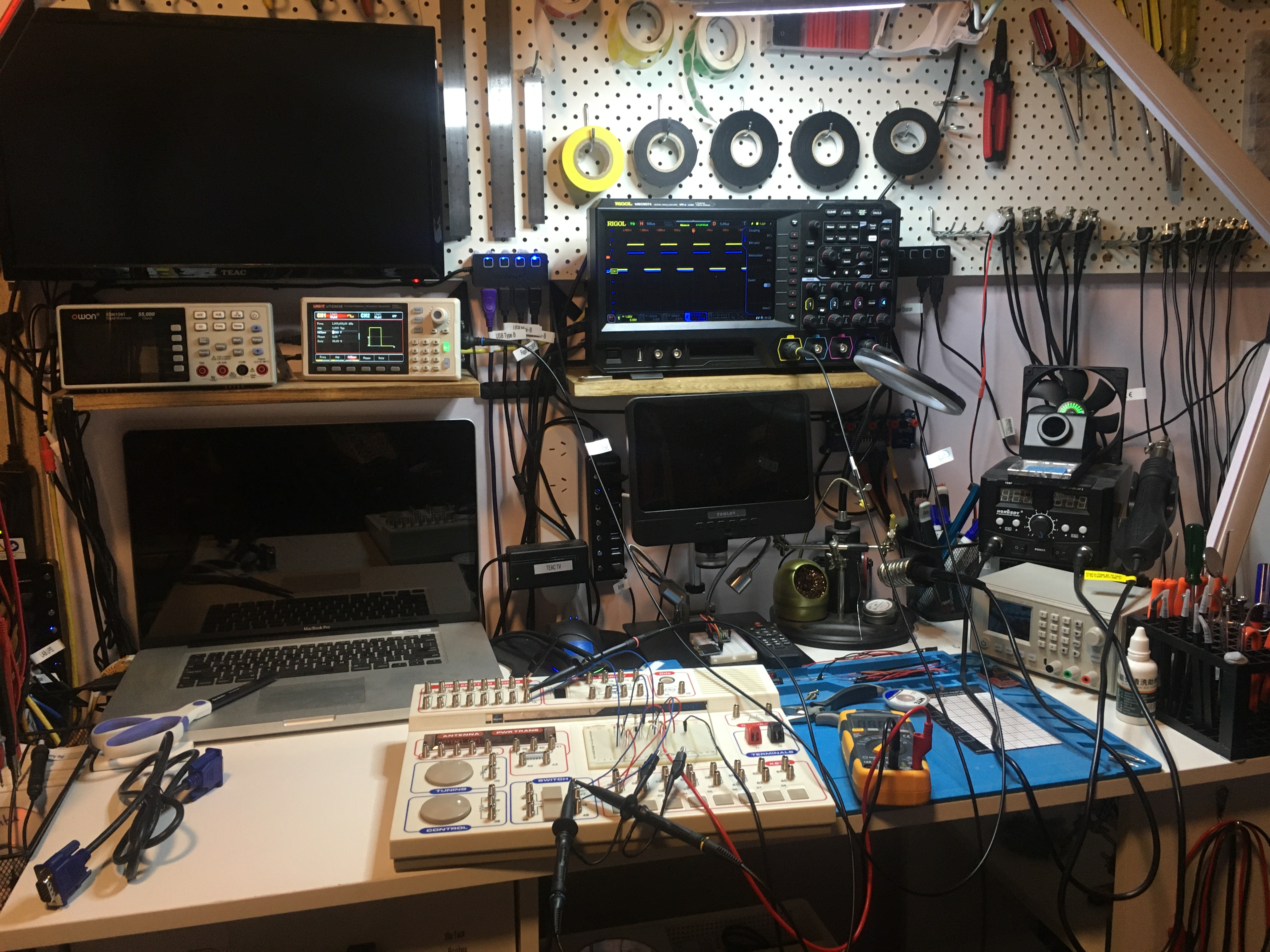
So I pumped a 1 kHz square wave into my DTL OR gate and observed the behaviour with my scope!
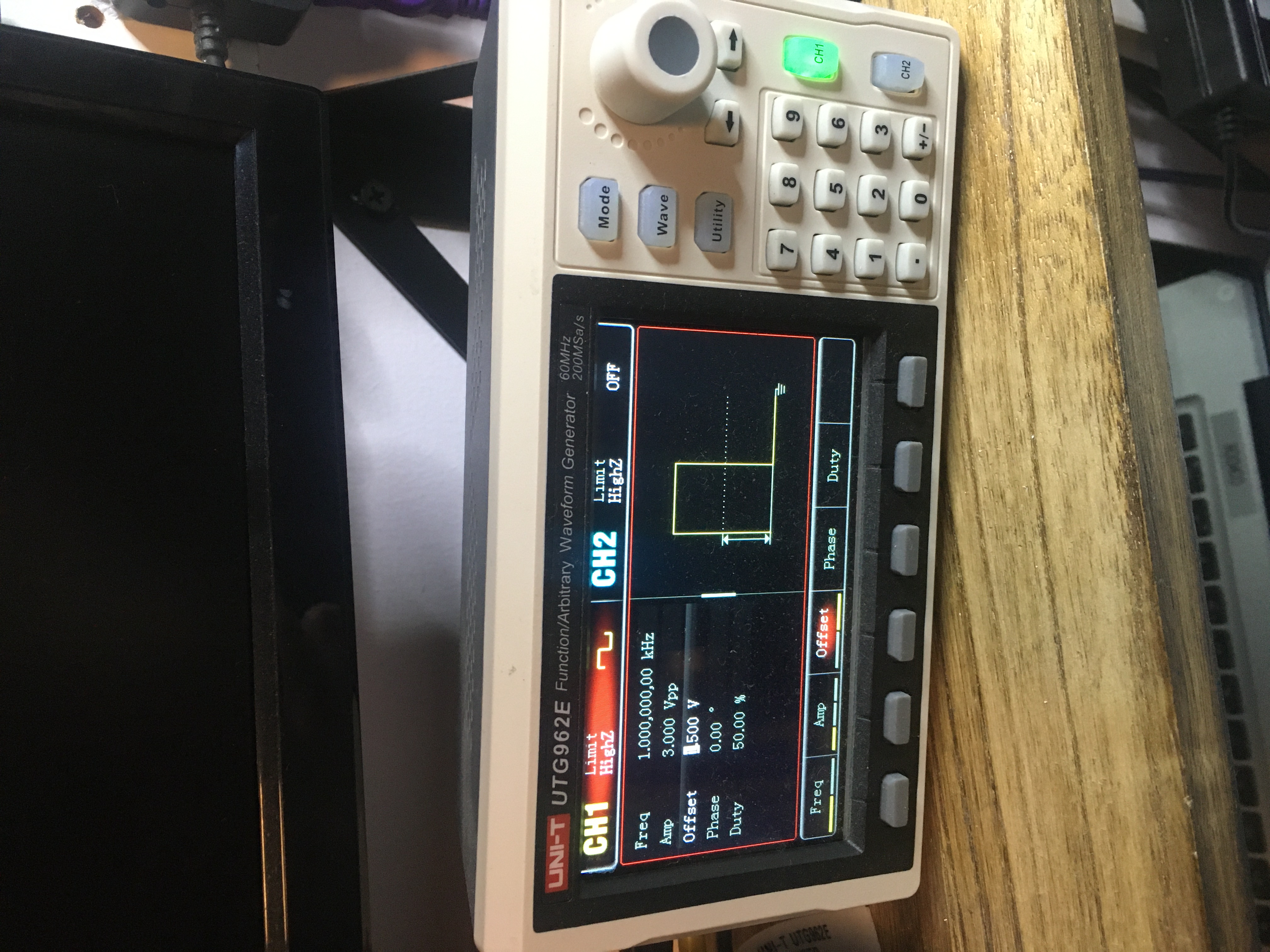
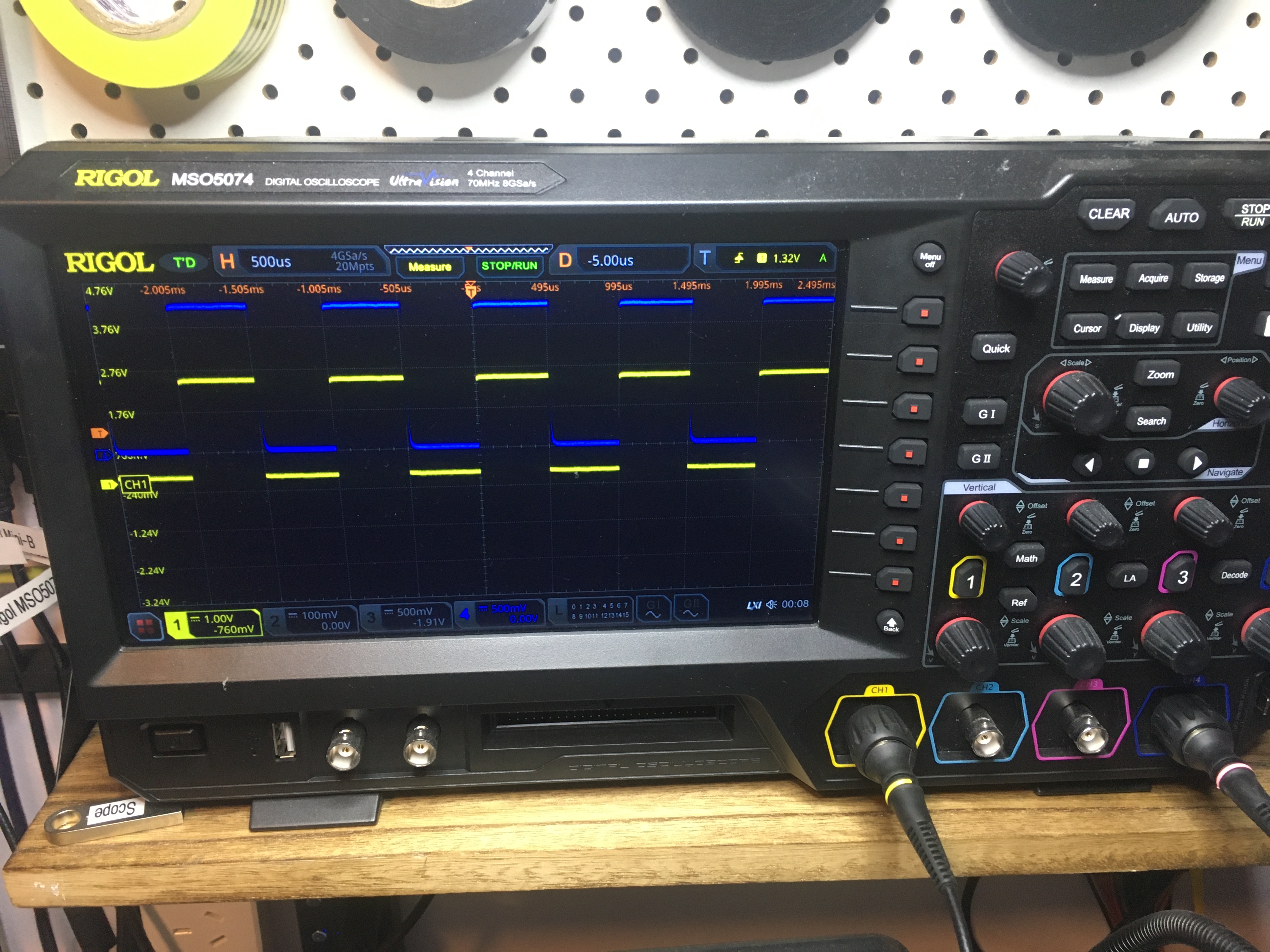
The square wave is in yellow, and the blue is the output signal.
You can see the output doesn’t drop back to zero quite as fast as the input.
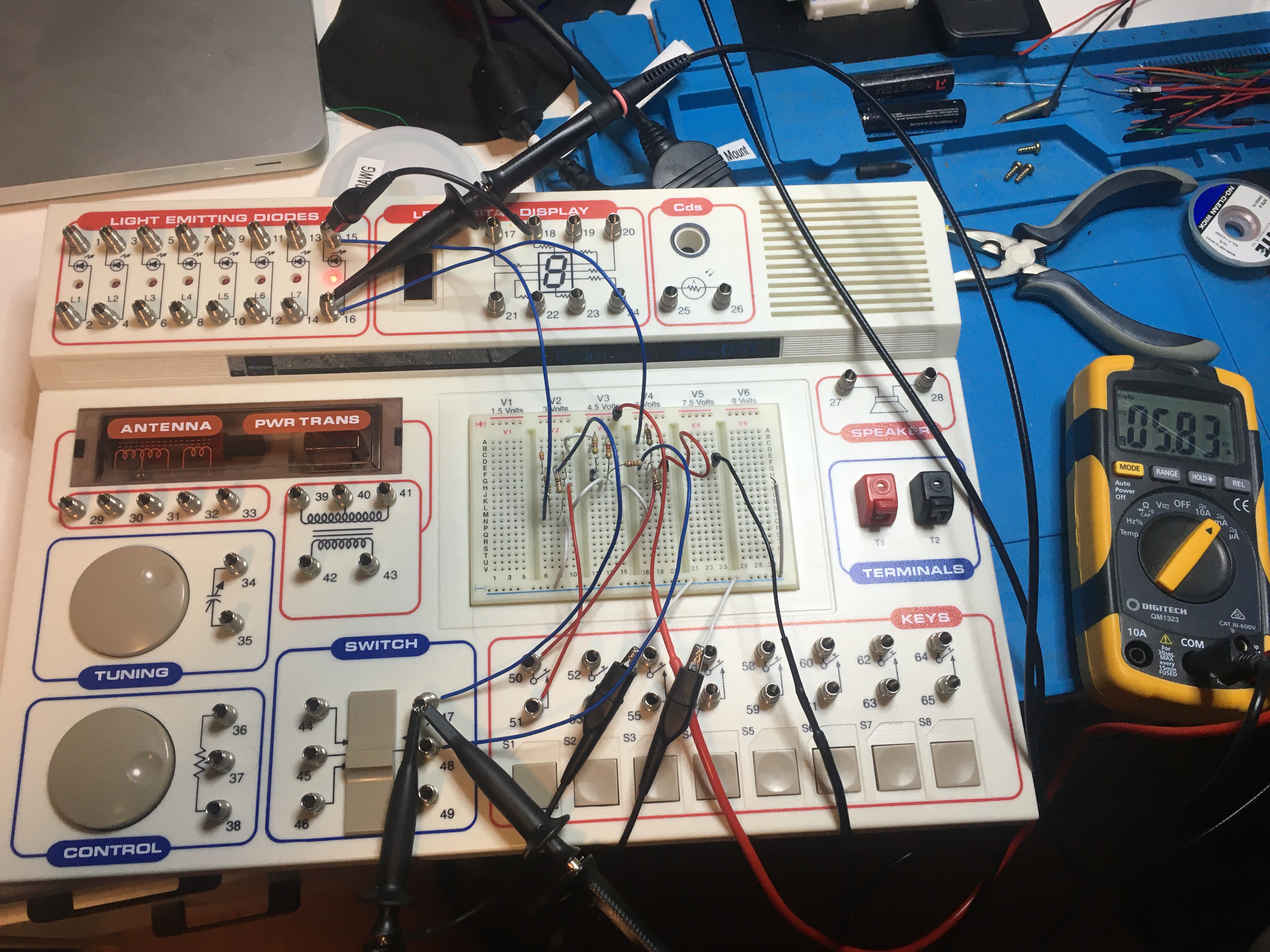
You can see on the multi-meter to the right that the current draw is about 5.83 mA. That’s consistent with my earlier measurements given a duty cycle of 50%.
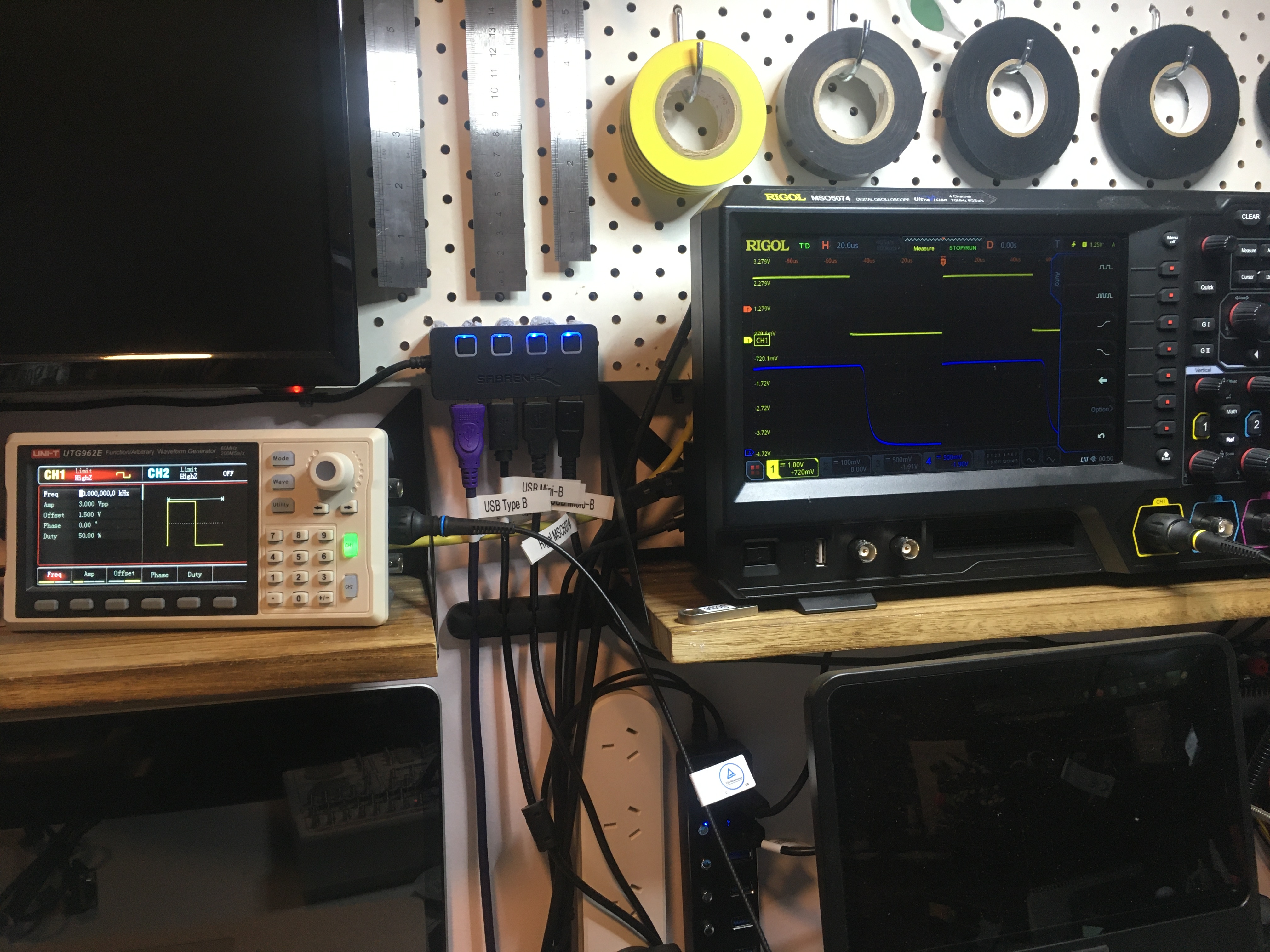
And you can see in the following photo that the frequency response of the circuit is rubbish. If you go much above about 10 kHz the output just stays “on”.
I found a good article explaining how pull-{up,down} resistors work and how to calculate appropriate values: Pull-up Resistors and Pull-down Resistors Explained.
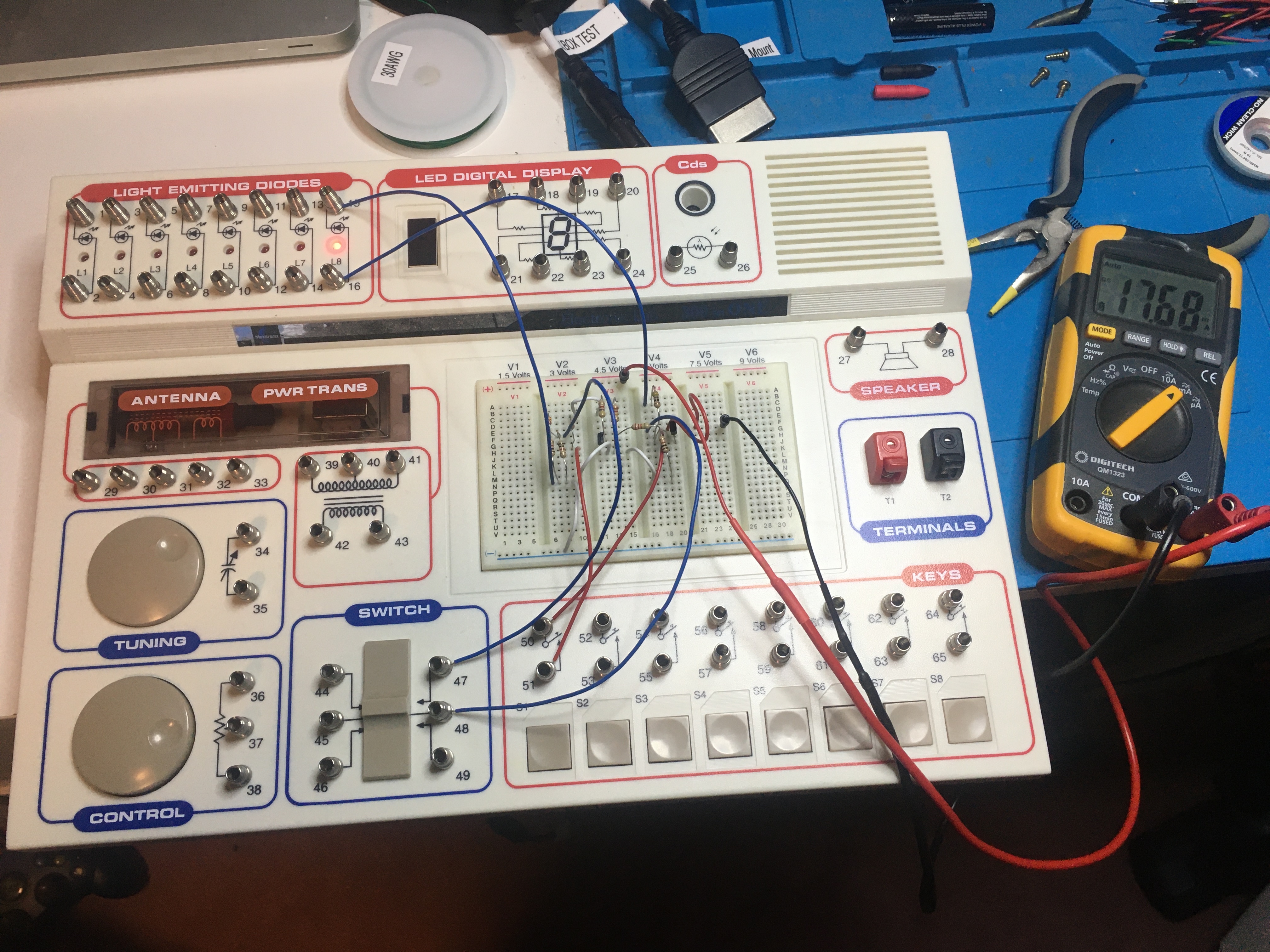
So I used my new cables in anger. I took a reading of the current draw on 300in1 project 155 that I was working on the other day. Will be able to experiment with the effect of using different resistors (and none at all).