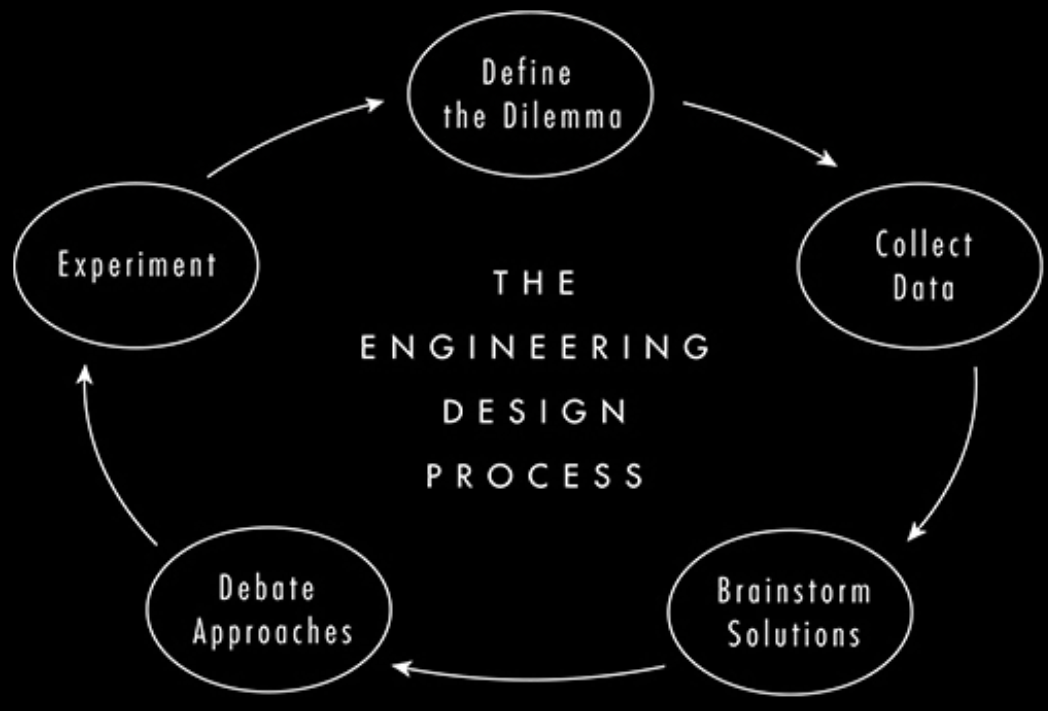
I’m reading Smarter Faster Better which shows The Engineering Design Process:
Category Archives: Philosophy
The Tao of Programming
道.
The SQ3R method
In How to Teach Anything: Break Down Complex Topics and Explain with Clarity, While Keeping Engagement and Motivation I learned about the SQ3R method, wherein “American educator Francis P. Robinson developed a method meant to help students really get the most comprehension from the texts they’re assigned—and, ergo, the subject they’re studying. Robinson sought a way to make reading more active, helping readers by creating dynamic engagement with books so the information stuck in their minds.”:
- survey
- question
- read
- recite
- review
Feynman technique
I’m reading How to Teach Anything: Break Down Complex Topics and Explain with Clarity, While Keeping Engagement and Motivation and I learned about the Feynman technique:
- Step One: Choose your concept.
- Step Two: Write down an explanation of the concept in plain English.
- Step Three: Find your blind spots.
- Step Four: Use an analogy.
The Scorpion and the Frog
I think the fable of The Scorpion and the Frog is worth knowing.
7-step method to approach any new task
I’m reading Master Your Thinking: A Practical Guide to Align Yourself with Reality and Achieve Tangible Results in the Real World. Here are seven questions to ask before you begin a task:
- Is this task a priority, or could I do it later?
- If I could do only one thing today, which task would have the most impact?
- Is this task moving me closer to my main goal?
- Do I really need to do it right now, or can I do it later?
- Is this task valid, or can I forget about it?
- Do I really need to do this task?
- Is right now the best time? What would happen if I delay it for a week? A month? Forever?
- Do I need to do this task, or am I doing it because it makes me feel good? In short, am I working on this task to escape from what I really should be doing?
- What does done look like?
- What exactly do I need to do here?
- What am I trying to accomplish?
- What does the finished product look like?
- Am I the person to do this task, or can I delegate to someone else?
- Is this task really worthy of my time?
- Can someone else do it better than me? If so, can I ask for help?
- What would happen if I simply remove/postpone this task?
- Do I enjoy working on this task? Does it motivate me?
- What’s the best way to complete this task?
- What tool(s) can I use, people can I ask, or method can I rely on to complete this task as efficiently and effectively as possible?
- What skill(s) could I learn or improve to help me complete this task faster in the future?
- Can I batch this task with other tasks I need to do?
- Can I batch this task with other similar tasks to boost my productivity?
- Can I automate this task, or create a checklist or template?
- Can I create templates to reuse every time I work on this or on similar tasks? For instance, you could design templates for the specific emails, presentations or documents you need to create over and over.
- Can I create a checklist? Checklists provide you with specific steps to follow, making it less likely you will become distracted or confused.
Schumacher’s dictum
I was reading a BSTJ article about the UNIX Time-Sharing System, which mentioned Schumacher’s dictum: that Small Is Beautiful. Turns out this phrase (small is beautiful) was originally posed in an economics context by Schumacher‘s teacher.
Programming as Theory Building
I’m in the middle of reading Programming as Theory Building (which was referenced from here) but I’m weary so off to bed. Will finish reading tomorrow. Hopefully.
Self-hosting email
I empathise with the concerns of this guy: After self-hosting my email for twenty-three years I have thrown in the towel. The oligopoly has won.
Counting
I was pleased to see “the simplest tally starts with judgments about what counts” when reading the blurb for Counting: How We Use Numbers to Decide What Matters. This is an idea I’ve had in mind for quite a while, and I’m happy to see it bubbling out into the mainstream. The final quote in the blurb was good too: “being in thrall to numbers is misguided and dangerous”.