I have a new post on Hackaday: Tips For C Programming From Nic Barker.
Tips For C Programming From Nic Barker
Reply

I have a new post on Hackaday: Tips For C Programming From Nic Barker.
This post is part of my video blog and you can find more information about this video.
You can support this channel on Patreon: patreon.com/JohnElliotV
Silly Job Title: Conductor Captain. I am the Conductor Captain!
In this video we take a look at the KY-010 Photo Interrupter. This module sets up a light beam and can detect when the beam is broken. We interface this module with an Arduino Uno after testing it with a simple circuit on the test board to figure out which pins are which. The pin labeled “S” is the signal, the pin labeled “-” is the negative or ground, and the middle pin is 5V VCC. The signal is high when the beam is interrupted and low otherwise.
There is more info about this sensor here: KY-010 Photo Interrupter Module at ArduinoModulesInfo.
Source code is here: 2025-10-06-KY-010-Photo-Interrupter.ino.
We use the Riden RD6006 Bench Power Supply to power our test circuits.
We use the EEVblog BM2257 Digital Multimeter to measure voltages.
We use the Kaisi S-160 45x30cm Repair Mat as our workspace.
Thanks very much for watching! And please remember to hit like and subscribe! :)
Following is a product I use picked at random from my collection which may appear in my videos. Clicking through on this to find and click on the green affiliate links before purchasing from eBay or AliExpress is a great way to support the channel at no cost to you. Thanks!
Yutiars Flat Paint Brushes notes notes |
Let’s go shopping!
Over in Intro to Data Oriented Design for Games, Nic Barker explains “taking information out-of-band”. Nic credits Andrew Kelly of Zig fame for introducing him to the idea (see Andrew Kelley Practical Data Oriented Design (DoD)).
The basic idea is that instead of having one list with items that have an enumeration with three different states, you can have three lists where membership implies the enum state, obviating the need to store the enum value in the item anymore, thus saving space and improving cache locality.
Nic Barker does an explanation of explaining data structures:
I didn’t learn anything in this one that I didn’t already know, but it is a very good explanation for a beginner.
Today ChatGPT helped me to Re-enable the KDE titlebar buttons for Firefox.
Bottom line: Right-click on Hamburget menu, choose Customize Toolbar… then check the Title Bar checkbox in the bottom-left hand side of the screen.
Everything is easy when you know how!
This post is part of my video blog and you can find more information about this video.
You can support this channel on Patreon: patreon.com/JohnElliotV
Silly Job Title: Chief Engineer. I am the Chief Engineer!
In this video we attach some alligator clips to a handful of AA battery holders. I was planning to use these for a Learning the Art of Electronics experiment that I didn’t understand, but now that I understand the problem a bit better I don’t want to go short-circuiting five AA batters… that would be a bad idea!
We use the METCAL PS-900 Soldering Station for soldering.
We use the MUIN Solder Fume Extractor to clear the air.
We use the EEVblog BM2257 Digital Multimeter for voltage and continuity testing.
We use the Hakko CHP 3C-SA Precision Tweezers for tweezering.
We use the Plato Model 170 Wire Cutter to snip, snip, snip.
We use the Kaisi S-160 45x30cm Repair Mat as our workspace.
Thanks very much for watching! And please remember to hit like and subscribe! :)
Following is a product I use picked at random from my collection which may appear in my videos. Clicking through on this to find and click on the green affiliate links before purchasing from eBay or AliExpress is a great way to support the channel at no cost to you. Thanks!
Yum Cha 4pcs 30mm Deep Hole Pen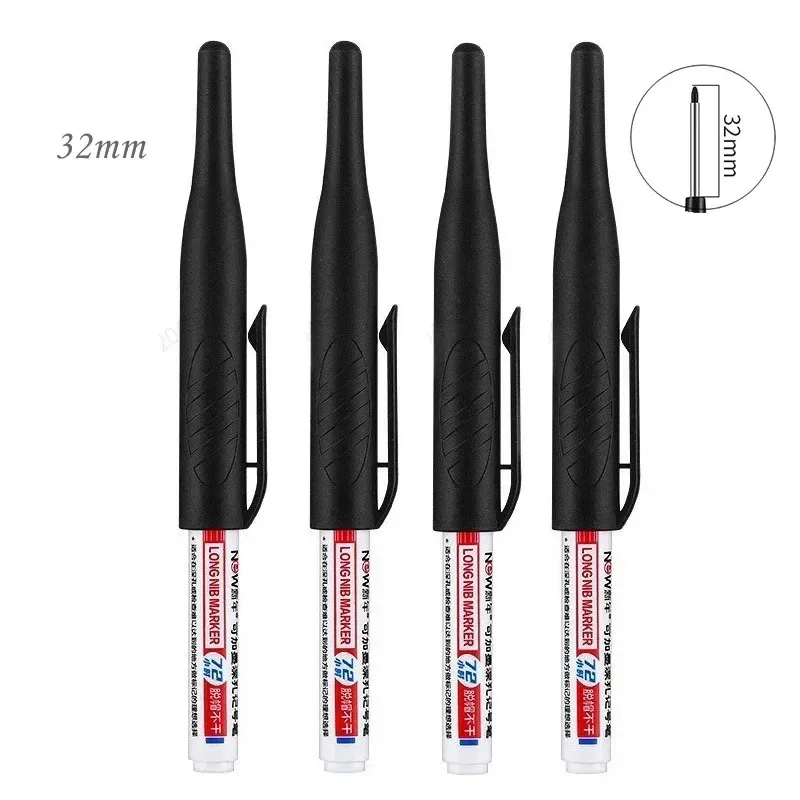 notes notes |
Let’s go shopping!
I have a new post on Hackaday: The Making Of A Minimalist Analog Drum Machine.
This post is part of my video blog and you can find more information about this video.
You can support this channel on Patreon: patreon.com/JohnElliotV
Silly Job Title: Digital Dancer. I am the Digital Dancer!
In this video we have a look inside Encyclopedia of Electronic Circuits Volume 2.
Circuits of particular interest were:
| Page | Circuit |
|---|---|
| 3 | Differential Voltage or Current Alarm |
| 33 | Low-Cost Chime Circuit |
| 34 | Sliding-Tone Doorbell |
| 109 | Demonstration Comparator Circuit |
| 151 | Crystal Tester |
| 274 | Precise Wave Generator |
| 321 | Back-Biased GaAsP LED Operates as Light Sensor |
| 341 | Magnetometer |
| 566 | Modified UFT Relaxation Oscillator Produces Clean Audio Sinusoids |
Some notes concerning things which came up:
SCS = Silicon-Controlled Switch: an SCS (Silicon-Controlled Switch) is a four-layer thyristor device — basically an SCR with an extra gate — that gives you extra control (including a way to force it off). It’s a member of the thyristor family used for controlled switching in low-power applications.
Ga = Gallium.
As = Arsenic.
P = Phosphorus.
Compander = compressor + expander. It’s a system (or device) that compresses the dynamic range of a signal before transmission or storage and then expands it back to (approximately) the original dynamic range at the receiver/playback end.
The NE570 / NE571 (and SA571) are dual compandor ICs: each chip contains two identical compressor/expander “kits” (full-wave rectifier → temperature-compensated variable-gain cell → op-amp + trim) used for dynamic range control and noise-reduction in audio/communications systems. They’re widely used as companders, VCAs, limiters/noise-gates and as the compressor/expander around BBD delay lines to reduce hiss.
β (beta) — also written hFE or hfe on datasheets — is the transistor’s current gain. For a bipolar junction transistor (BJT) it’s the ratio of collector current to base current: β = IC / IB.
Q (quality) factor: measures how selective or sharp a resonant system is. High Q → narrow bandwidth, slow damping (lots of ringing). Low Q → wide bandwidth, heavy damping (quickly dies out).
I asked ChatGPT to please explain damping and ringing.
The 5558 IC is a dual op-amp in the 1458/1558 family (often labelled LM1558 / MC1558 / 5558 depending on maker). These are general-purpose, internally-compensated dual operational amplifiers (audio, filters, integrators, buffers).
My programmable load is the ZKETECH EBD-A20H Electronic Load.
SCA = Subsidiary Communications Authorization / subcarrier (used for background music/data in FM radio broadcasting).
We encountered Chebyshev filters which are analog or digital filters that have a steeper roll-off than Butterworth filters, and have either passband ripple (type I) or stopband ripple (type II).
UJT = Unijunction Transistor, a three-terminal semiconductor device (Emitter E, Base1 B1, Base2 B2) with a single PN junction and an internal resistive path between B2 and B1. It’s widely used as a simple relaxation-oscillator/timing/trigger device because it shows a controlled negative-resistance region when the emitter is driven above a threshold.
PUT = Programmable Unijunction Transistor; a PUT is a three-terminal semiconductor device (Anode, Cathode, Gate) that behaves like a unijunction transistor but whose trigger (peak) point is set externally by resistors — i.e. it’s programmable. It’s essentially a four-layer PNPN device (closely related to SCRs in internal construction) with the gate used to set the firing threshold.
My anti-static monitor is an Auto-alarm Anti Static ESD Wrist Strap Tester Output Anti-static Online Monitor For Anti-static Electronic ESD Meter.
A squib is a small explosive which can be used as a detonator.
A “TR circuit” can mean variously:
SSB = Single-SideBand — a form of amplitude modulation where the carrier and one of the sidebands are removed so only one sideband (upper or lower) is transmitted.
The 2N4871 is a classic silicon PN unijunction transistor (UJT) used for timing/oscillator and trigger circuits.
RTD = Resistance Temperature Detector, a temperature sensor that measures temperature by sensing the electrical resistance of a metal element, which changes predictably with temperature. RTD stands for Resistance Temperature Detector.
A Theremin is a type of musical instrument.
The 4069 is a hex inverter.
The 4046 is a Phase-Locked-Loop.
Thanks very much for watching! And please remember to hit like and subscribe! :)
Following is a product I use picked at random from my collection which may appear in my videos. Clicking through on this to find and click on the green affiliate links before purchasing from eBay or AliExpress is a great way to support the channel at no cost to you. Thanks!
Yizhan Digital Microscope notes notes |
Let’s go shopping!