Electronics Project #12: Making an LED Heart | Learning Electronics In The Lab With Jay Jay

This post is part of my video blog and you can find more information about this video over here.

You can support this channel on Patreon: patreon.com/JohnElliotV

Silly Job Title: Bit Distinguisher.

In this video we build an LED heart. It is beautiful and green.

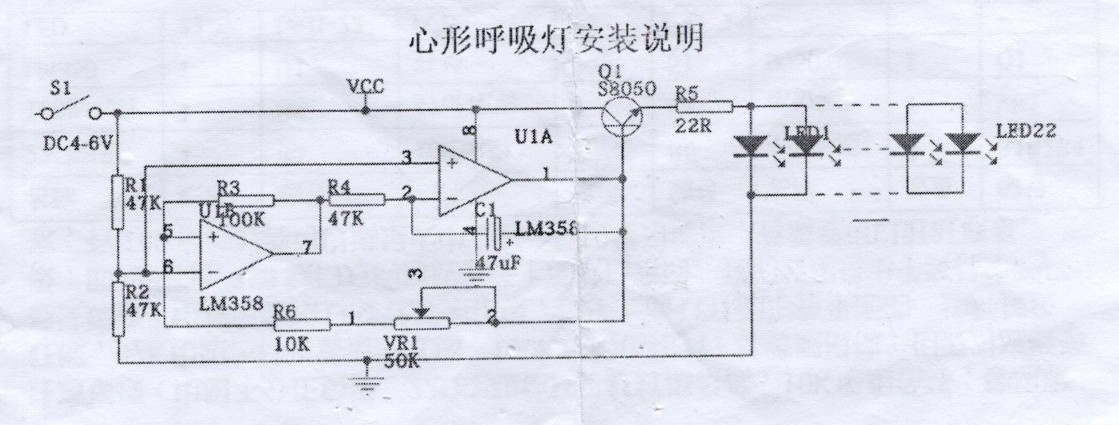
The schematic and instructions are these:
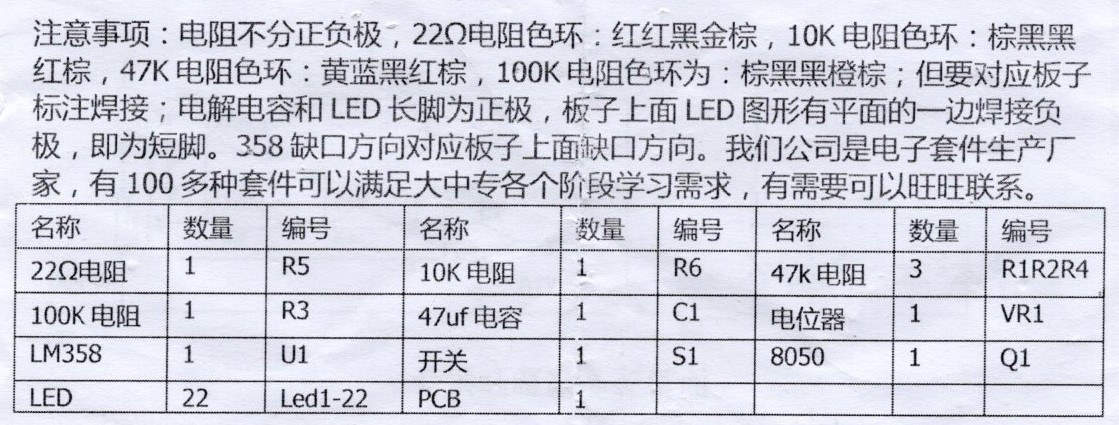
Instructions in Chinese

Schematic in Chinese

As we discover in the video this circuit is an astable multivibrator made with two op-amps provided by an LM358.

I mention that my copy of Learning the Art of Electronics: A Hands-On Lab Course 2nd Edition has arrived. Very happy about that! I will be getting on with the notes for these very soon.

I mention about the two Logitech BRIOs that I have installed as my “maths cam”. This will enable me to record my maths videos, which I am planning to start soon. I will be working through my old high school mathematics textbooks starting with Signpost 7.

I mentioned my Spivak calculus book, and my Stewart calculus book too, but I can’t seem to find my copy of that at Amazon. If you’re interested in such things check out Calculus by Spivak from Learning as a hobby.

We use the METCAL PS-900 Soldering Station for soldering.

We use the Peak Electronic Design Atlas DCA75 Pro Semiconductor Analyzer to check our NPN transistor.

We use the Peak Electronic Design Atlas LCR45 LCR Meter to check our resistors and capacitor.

We use the Riden RD6006 Bench Power Supply to provide 5V for testing.

We use the Yizhan Digital Microscope to have a closer look at a few things.

We use the Hakko CHP 3C-SA Precision Tweezers for working with small parts.

I mention about these bins which I have purchased recently. They are cheap and a good size but my experience is that the material is very brittle and prone to breaking.

And love to Nirvana for Heart-Shaped Box. 💕

Also, here’s the full list of my ESP32 boards:

Thanks very much for watching! And please remember to hit like and subscribe! :)


Following is a product I use picked at random from my collection which may appear in my videos. Clicking through on this to find and click on the green affiliate links before purchasing from eBay or AliExpress is a great way to support the channel at no cost to you. Thanks!

Wozniak Solder LugsThis is an image of the product.notes
Let’s go shopping!

Mail Call #28: EEVblog BM036, Test Hook Clips, 4mm to 2mm Banana Adapter, a Book and a Movie

This post is part of my video blog and you can find more information about this video over here.

You can support this channel on Patreon: patreon.com/JohnElliotV

In this video we see what’s come in the mail!

Also mentioned in this video:

Thanks very much for watching! And please remember to hit like and subscribe! :)


Following is a product I use picked at random from my collection which may appear in my videos. Clicking through on this to find and click on the green affiliate links before purchasing from eBay or AliExpress is a great way to support the channel at no cost to you. Thanks!

Yum Cha USB 3.0 Powered 4-Port USB HubThis is an image of the product.
Let’s go shopping!

Introducing Learning the Art of Electronics | Learning Electronics In The Lab With Jay Jay

This post is part of my video blog and you can find more information about this video over here.

You can support this channel on Patreon: patreon.com/JohnElliotV

This project’s homepage is here: John’s wiki § Learning the Art of Electronics.

In this video we introduce a new feature of the show. In these segments we will be working through Learning the Art of Electronics.

We will be doing a total of 27 videos for this feature. 25 labs, this introduction, and a conclusion. Videos will come out on the first Tuesday of every month (hopefully!).

We did a new book teardown for this book last year: New Book Teardown #3: Learning The Art of Electronics: A Hands-On Lab Course (2016) | In The Lab. You can see in the comments a number of people encouraged me to make videos for this book, so that’s what we’re doing now.

Also a shout out to my mate over on Learning as a hobby for encouraging me to undertake this project.

Thanks very much for watching! And please remember to hit like and subscribe! :)


Following is a product I use picked at random from my collection which may appear in my videos. Clicking through on this to find and click on the green affiliate links before purchasing from eBay or AliExpress is a great way to support the channel at no cost to you. Thanks!

JST XH2.54 6pin Pre-crimped ConnectorThis is an image of the product.

Let’s go shopping!

Homework

This is a part of the homework feature of my blog, which is an ongoing conversation with my mate S.F.

Hey mate. Lovely to see you again, as always.

I have a note here about Milo but I’m not sure why.

There is a rumor that the story of Snow White and the Seven Dwarfs is about cocaine addiction, particularly that the Seven Dwarfs represent the various stages. But Snopes says this theory is bunk.

Two authors Strunk & White wrote a book called The Elements of Style which is a style guide for formal grammar used in American English writing. Famously they said “let every word tell”.

The phone you gave me I named ‘skadi’ after the Norse goddess Skaði.

According to John Cleese in his hilarious letter Something of a Retraction: Cleese letter to the U.S., French fries aren’t French, they’re Belgian.

I heard a rumour that DeepSeek says there are three r’s in “strawberry” but I can’t find a corroborating source.

Penny Arcade is great. I mentioned this one: Dirty One.

In Laws and Sausages the structure of the United States of America is explained in a comic format.

In Death of a Salesman there is a famous quote “A salesman is got to dream. It comes with the territory.”

Tribal not racist.

I think all you need for subjective experience is one or more sensors. Both consciousness and self-awareness are different to that. Although they probably do entail subjective experience too.

I should have a promotions policy on my website. Thanks for the suggestion. I will look into this.

There is a famous RFC: Key words for use in RFCs to Indicate Requirement Levels. This, for instance, defines what the word “should” should mean.

The seven check marks are elements of white privilege, given as:

  1. male
  2. white
  3. heterosexual
  4. at least one highly educated or wealthy parent
  5. at least one parent born in the Netherlands
  6. a VWO diploma (preparatory scientific education)
  7. and a diploma from the University

In Outliers the author Malcolm Gladwell comes to the conclusion that success is mostly luck. In the same book Gladwell says that to attain mastery the a subject needs to be actively studied for 10,000 hours.

In Magic Words and How to Use Them the author explains how you can use uncompromising positivity to craft the life you want. Seemed to work for me, if you’re positive about people they seem to magically be positive back.

The Old New Thing is a blog from Raymond Chen, a long time programmer from Microsoft who had a lot to do with Windows.

I mentioned that Alan Kay worked for both Atari and Apple.

The famous quote “Never underestimate the bandwidth of a station wagon full of tapes hurtling down the highway.” is from Andrew S. Tanenbaum.

Asleep From Day by The Chemical Brothers.

Why You Will Marry the Wrong Person from Alain de Botton.

Before you speak let your words pass through three gates:

  1. is it true?
  2. is it necessary?
  3. is it kind?

Analog Meters for Learning the Art of Electronics

I was flipping through my copy of Learning the Art of Electronics: A Hands-On Lab Course (I have the first edition, this second edition comes out in Australia on 3 April 2025, I have a copy on pre-order, I think it’s already available in the USA) and I noticed that some analog meters are used in the first lab course.

So in preparation for doing that I purchased some analog meters, being these:

I am planning to start working through these projects on my YouTube channel @InTheLabWithJayJay at a rate of one project every 28 days starting April 1st. April 1st, being April Fools’ Day, is of course the traditional date for launching IT projects and it is also the one year anniversary of my video (which happens to be my most popular YouTube video by a large margin): New Book Teardown #3: Learning The Art of Electronics: A Hands-On Lab Course (2016) | In The Lab.