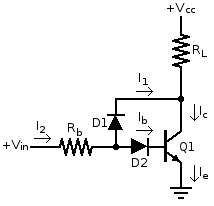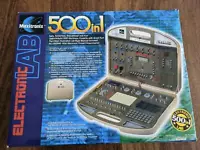
I am way behind on my videos for In The Lab With Jay Jay, but it’s not for lack of trying! I’ve recorded the video for project 9 of the Maxitronix 20in1 something like five times now, but I still can’t release it because the circuit will not work as advertised. It’s suppose to be a demo of a monostable multivibrator, which is also known as a one-shot multivibrator, but the circuit isn’t working the way that a monostable multivibrator is supposed to work. I’m still in the process of debugging it. I think the problem is a problem with instructions and not my implementation (the instructions are fairly low quality and unreliable in my experience so far), but I haven’t arrived at the bottom of this one yet. I will continue to try and solve this conundrum tomorrow.
Category Archives: Design
Extra Content #7: The SCSI Bus and IDE Interface: Protocols, Applications and Programming
This post is part of my video blog: In The Lab With Jay Jay.
You can support this channel on Patreon: patreon.com/JohnElliotV
In this video I pull the floppy disk out of the cover of my copy of The SCSI Bus and IDE Interface: Protocols, Applications and Programming (2nd Edition).
I have this wonderful old book The SCSI Bus and IDE Interface: Protocols, Applications and Programming (2nd Edition). It was published in 1997 but is still available for purchase through Amazon.
The book comes with a floppy disk (that’s right: a floppy disk!). I had to buy a USB floppy disk drive to read it. I have made the content from the disk available in a tarball, here: scsi.tgz.
If you just want to read the files, those are here:
Following is a list of products I use which may appear in my videos. Clicking through on these links before purchasing from Amazon, eBay, or AliExpress is a great way to support the channel at no cost to you. Thanks!
Let’s go shopping!
EEVblog #63 – Microchip PIC vs Atmel AVR
Today I stumbled upon some vintage Dave Jones which made me happy: EEVblog #63 – Microchip PIC vs Atmel AVR. :)
Make: AVR Programming
I am reading Make: AVR Programming: Learning to Write Software for Hardware and I found this excellent video: Programming AVR Microcontrollers in C – O’Reilly Webcast available from here: Beyond the Arduino: Programming AVR Microcontrollers in C.
The author’s github page is still operational: https://github.com/hexagon5un/AVR-Programming
Their website littlehacks.org is offline but still available via archive.org: https://web.archive.org/web/20160307235812/http://littlehacks.org/
Also there’s this really cool collection of projects over here: Cornell University ECE 4760 Designing with Microcontrollers Final Projects.
ISP vs ICSP
User:
ISP vs ICSP
ChatGPT 4:
When discussing programming and interfacing with microcontrollers, “ISP” and “ICSP” are two terms that often come up. Here’s a breakdown of what each means and how they compare:
ISP (In-System Programming)
- Definition: ISP refers to the ability to program a microcontroller while it is placed within the actual system or circuit where it will operate. This method doesn’t require the microcontroller to be removed from its application circuit for programming. It’s a very convenient way to update firmware or make changes to the program running on the microcontroller without needing to disassemble the system.
- Advantages: It enables easy updates and debugging since the microcontroller does not need to be removed. This can significantly speed up development cycles and make maintenance simpler.
- Usage: Common in many microcontrollers, including AVR, ARM, and others. It typically requires a few specific pins to be accessible for the programming interface.
ICSP (In-Circuit Serial Programming)
- Definition: ICSP is a form of ISP specifically using a serial interface to program the microcontrollers while they are installed in a circuit. It’s a subset of ISP with a focus on the serial communication aspect. This method is often associated with Microchip microcontrollers but is not exclusive to them.
- Advantages: The serial nature of ICSP means it usually requires fewer pins and can sometimes support lower voltage programming, making it suitable for a wide range of devices and situations. It’s particularly useful for devices where space and pin count are at a premium.
- Usage: Predominantly seen with Microchip’s PIC microcontrollers, though the concept applies broadly. Like ISP, it necessitates access to specific programming pins but often fewer than other methods.
Comparison
- Scope: ISP is a broader term encompassing any in-system programming technique, including serial, parallel, or any other method. ICSP is specifically about serial programming.
- Interface and Protocol: ICSP typically involves specific protocols and hardware interfaces tailored for serial communication. In contrast, ISP can use various protocols and interfaces depending on the microcontroller and the system’s requirements.
- Microcontroller Support: While many microcontroller families support ISP, ICSP is more commonly associated with certain brands or families, like Microchip’s PIC series.
In summary, ICSP is a specific form of ISP. The choice between ISP and ICSP often comes down to the specific requirements of the project, including the microcontroller being used, the available pins for programming, and the preferred programming method. Both aim to provide flexibility and ease of use for developers and engineers when programming microcontrollers within their final application environment.
The Brain User’s Handbook: A Neuroscience-inspired Guide to Peace of Mind
I am reading The Brain User’s Handbook: A Neuroscience-inspired Guide to Peace of Mind which has this awesome image I want to share:

New Book Teardown #2: The Art of Electronics: The x-Chapters (2020) | In The Lab With Jay Jay
This post is part of my video blog and you can find more information about this video on this show’s homepage which is here.
You can support this channel on Patreon: patreon.com/JohnElliotV
Silly Job Title: Spark Slinger
This video is part of the New Book Teardown feature of my video blog.
In this video I take a look at The Art of Electronics: The x-Chapters by Paul Horowitz and Winfield Hill published in 2020. The book has 506 pages and is a companion to The Art of Electronics 3rd Edition.
In the book we learn about the Cascode two-stage amplifier and the push-pull amplifier.
We also see mention the Eye Diagram and there is discussion of the Potentiometer.
Thanks very much for watching! And please remember to hit like and subscribe!
Following is a product I use picked at random from my collection which may appear in my videos. Clicking through on this to find and click on the green affiliate links before purchasing from eBay or AliExpress is a great way to support the channel at no cost to you. Thanks!
Maxitronix 10 In 1 (10in1) Electronics Project Lab Kit notes |
Let’s go shopping!
Photometer | Project 6/20 | Maxitronix 20in1 | In The Lab With Jay Jay
This post is part of my video blog and you can find more information about this video on this show’s homepage which is here.
You can support this channel on Patreon: patreon.com/JohnElliotV
In this video I do the sixth Maxitronix 20in1 Electronic Project Lab project: Photometer.
Thanks very much for watching! And please remember to hit like and subscribe!
Following is a product I use picked at random from my collection which may appear in my videos. Clicking through on this to find and click on the green affiliate links before purchasing from eBay or AliExpress is a great way to support the channel at no cost to you. Thanks!
ANENG AN-999S Bench Multimeter notes |
Let’s go shopping!
Light-Controlled Organ | Project 5/20 | Maxitronix 20in1 | In The Lab With Jay Jay
This post is part of my video blog and you can find more information about this video on this show’s homepage which is here.
You can support this channel on Patreon: patreon.com/JohnElliotV
In this video I do the fifth Maxitronix 20in1 Electronic Project Lab project: Light-Controlled Organ.
Thanks very much for watching! And please remember to hit like and subscribe!
Following is a product I use picked at random from my collection which may appear in my videos. Clicking through on this to find and click on the green affiliate links before purchasing from eBay or AliExpress is a great way to support the channel at no cost to you. Thanks!
Yum Cha 395nm UV Lamp notes |
Let’s go shopping!
Light Alarm With Latch | Project 4/20 | Maxitronix 20in1 | In The Lab With Jay Jay
This post is part of my video blog and you can find more information about this video on this show’s homepage which is here.
You can support this channel on Patreon: patreon.com/JohnElliotV
In this video I do the fourth Maxitronix 20in1 Electronic Project Lab project: Light Alarm With Latch.
Thanks very much for watching! And please remember to hit like and subscribe!
Following is a product I use picked at random from my collection which may appear in my videos. Clicking through on this to find and click on the green affiliate links before purchasing from eBay or AliExpress is a great way to support the channel at no cost to you. Thanks!
FNIRSI DSO-TC3 3 in 1 Oscilloscope, Signal Generator, Component Tester notes |
Let’s go shopping!