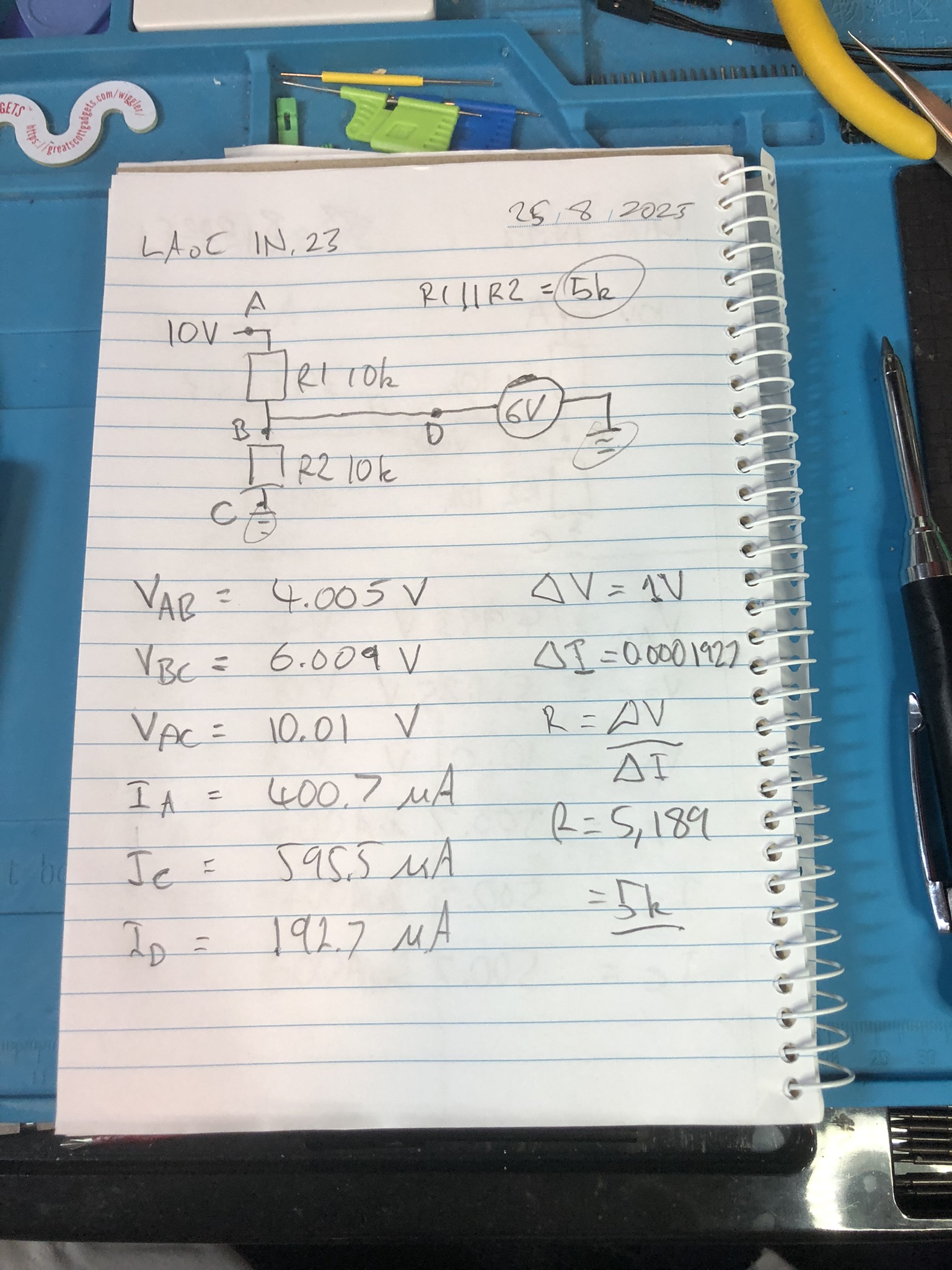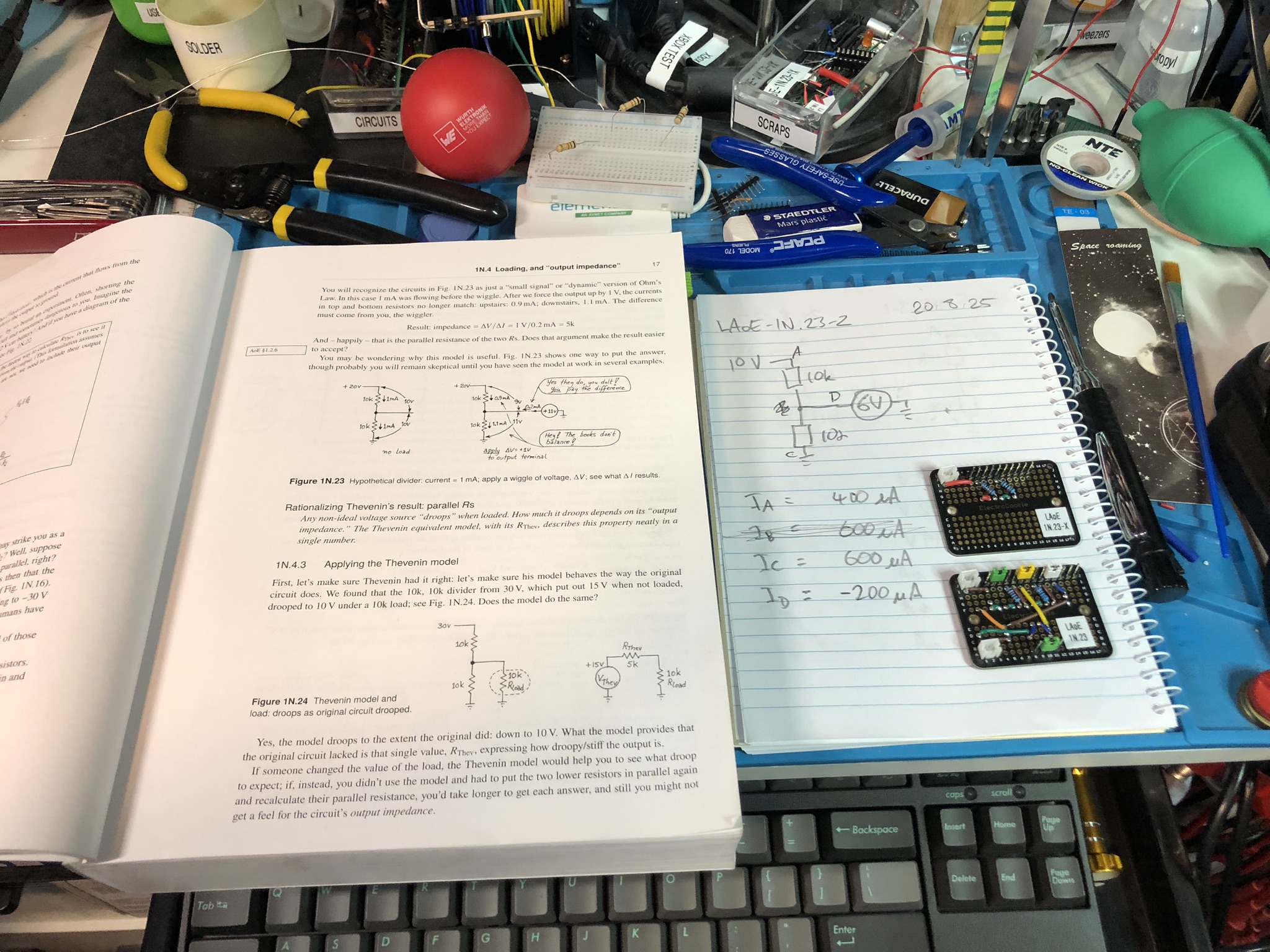
Learning the Art of Electronics: Fig-1N.23: Hypothetical Voltage Divider | In The Lab With Jay Jay

This post is part of my video blog and you can find more information about this video over here.

You can support this channel on Patreon: patreon.com/JohnElliotV

Silly Job Title: Operation Manager.

In this video we build our first circuits for Learning the Art of Electronics. The introductory video for this project is here: Introducing Learning the Art of Electronics.

The pre-reading for today’s project is up to page 17 of the course work. If you want to dig deeper there is extra reading to be found on the project home page. Note that some of my notes on the ITL Wiki are only available to people who support me on Patreon (see above).

We use the METCAL PS-900 Soldering Station for soldering.

We use the EEVblog BM2257 Digital Multimeter to test voltages and currents.

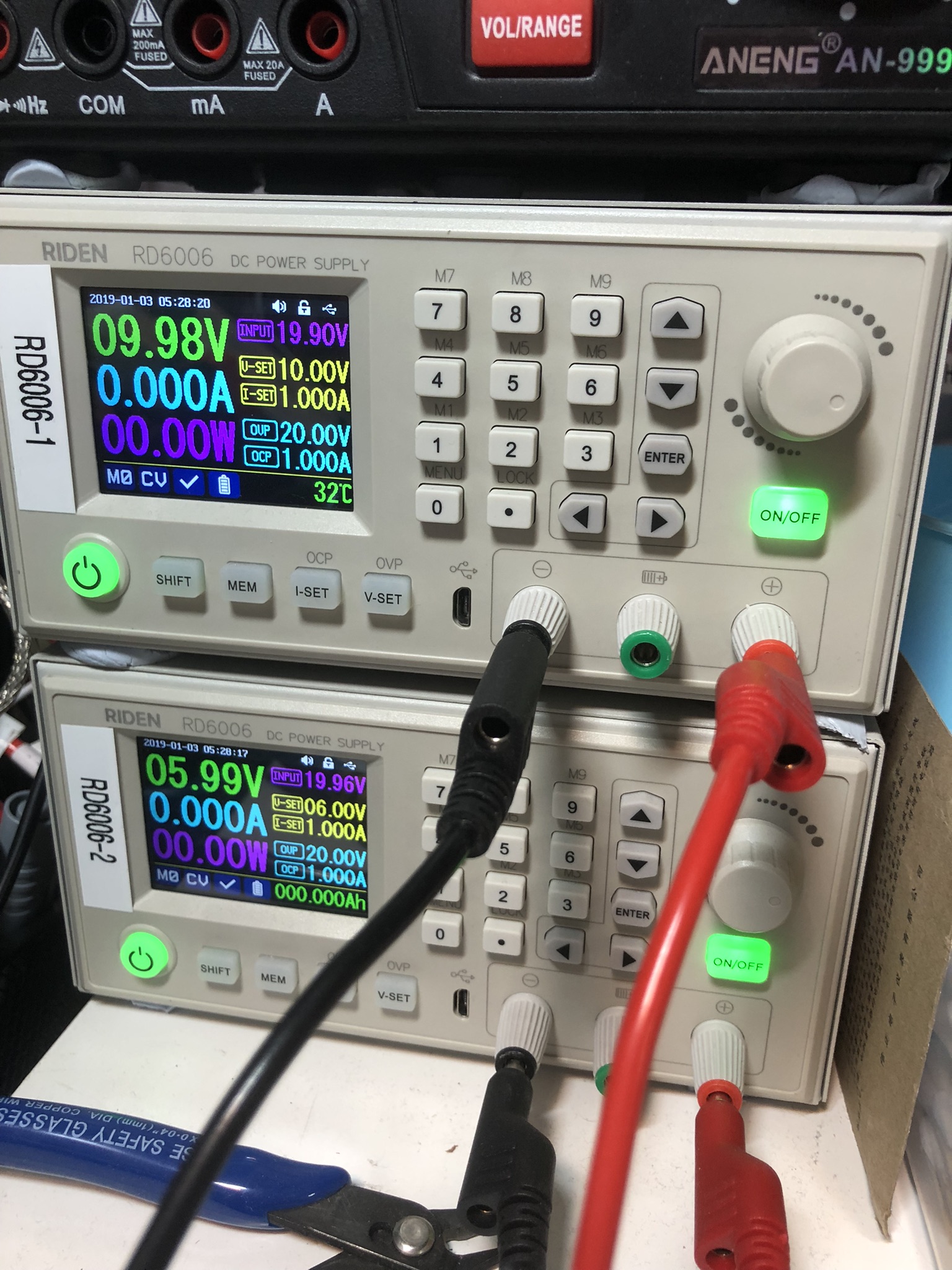
We use the Riden RD6006 Bench Power Supplies to power our test circuits.

We use the Brother P-Touch D210 Label Maker to label our circuits.

We use the WilliamKlein Music Stand to hold our book.

We use the Scotch Titanium Scissors to cut things.

We use the Carpenter Mechanical Pencil to make our notes.

We use the Hakko CHP 3C-SA Precision Tweezers for precision maneuvering.

We use the Plato Model 170 Wire Cutter to cut our wires.

Thanks very much for watching! And please remember to hit like and subscribe! :)

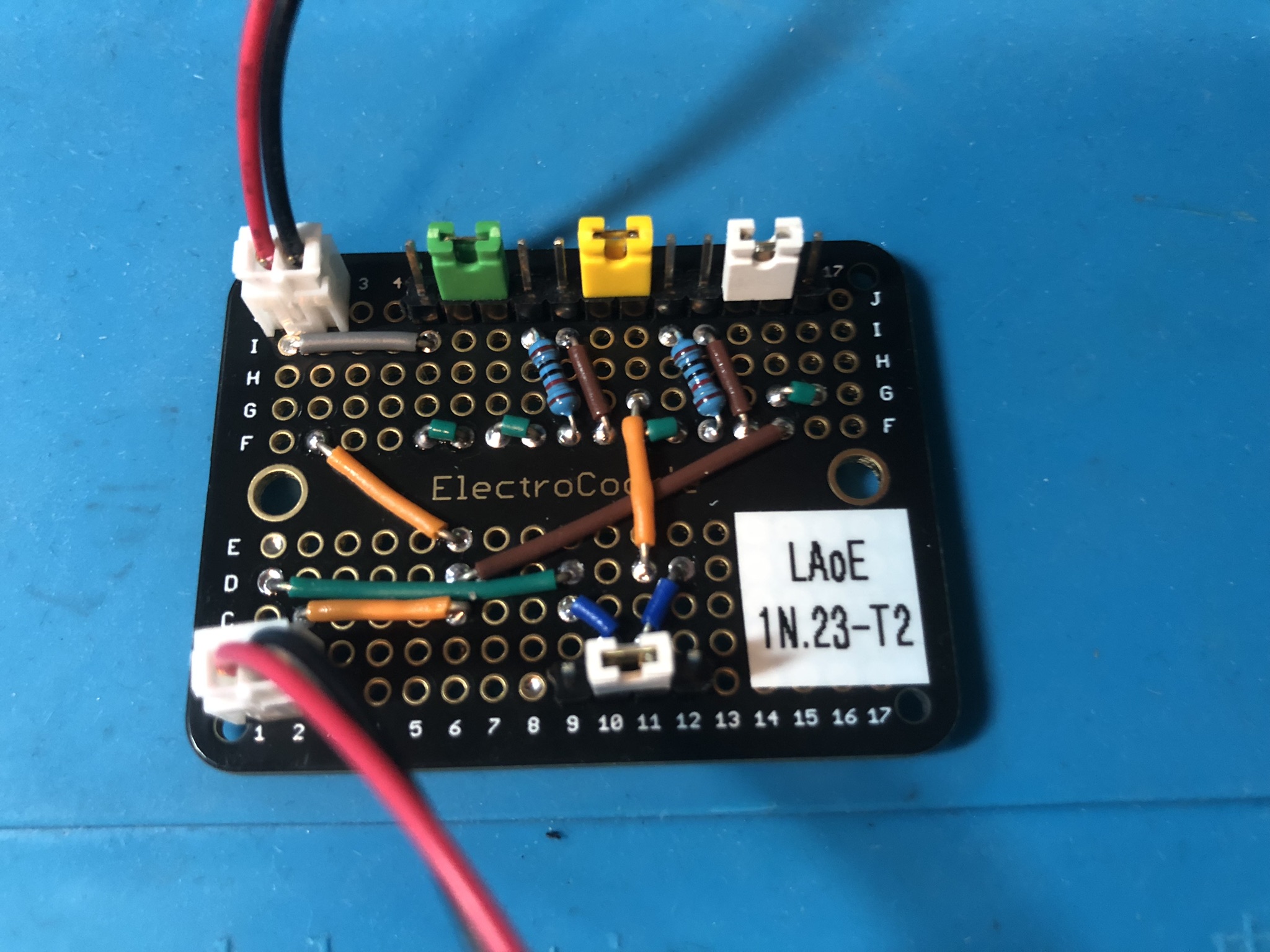
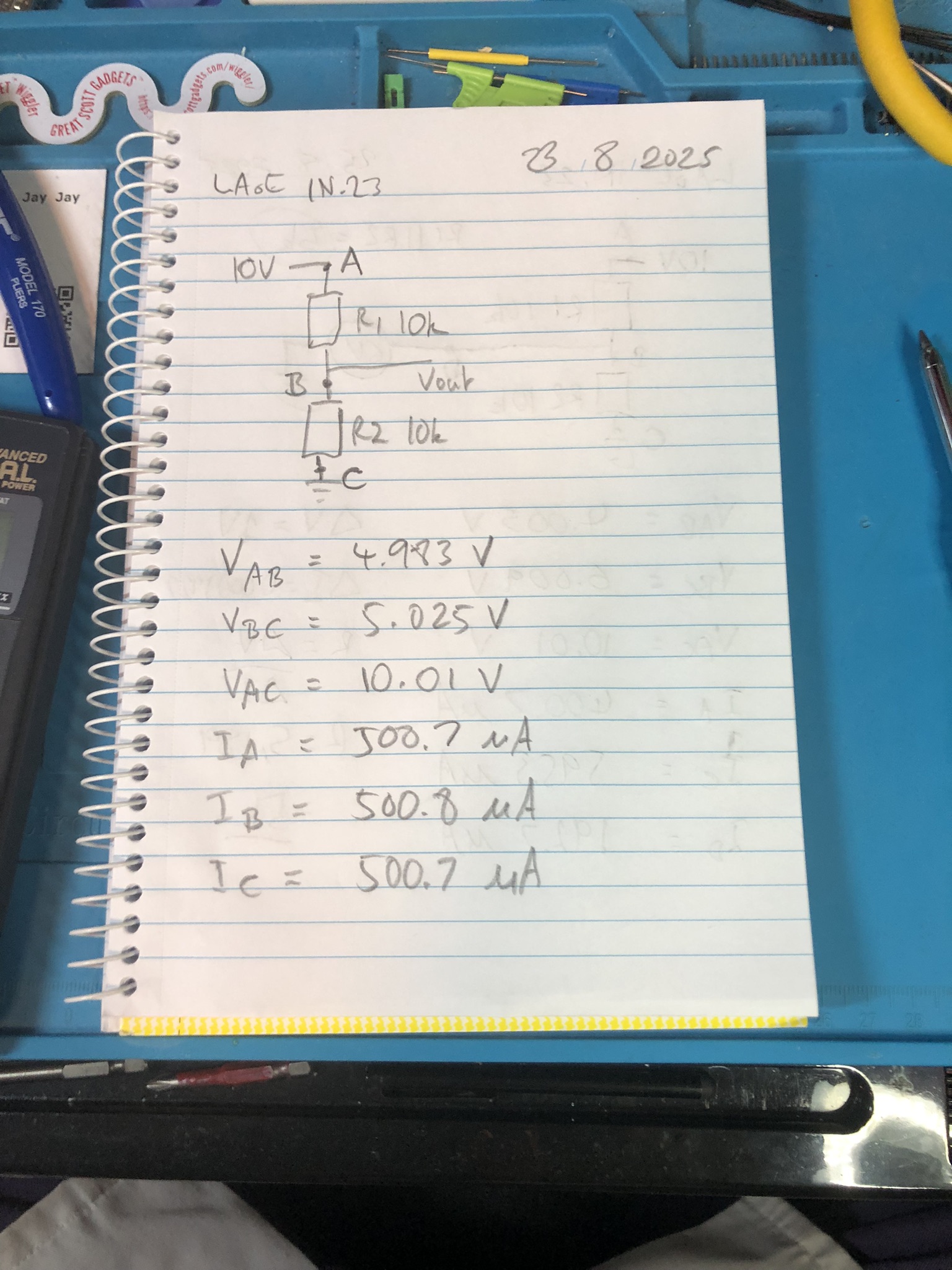
Following are some happy snaps of the results:


Following is a product I use picked at random from my collection which may appear in my videos. Clicking through on this to find and click on the green affiliate links before purchasing from eBay or AliExpress is a great way to support the channel at no cost to you. Thanks!

Yum Cha 9 in 1 Air Quality MeterThis is an image of the product.

Let’s go shopping!

Electronics Project #16: Making Power Cables for Learning the Art of Electronics | In The Lab

This post is part of my video blog and you can find more information about this video over here.

You can support this channel on Patreon: patreon.com/JohnElliotV

Silly Job Title: Transistor Troubadour.

In this video we make some power cables which we will be using when we start to make the circuits for Learning the Art of Electronics. In particular we make two banana jack to DC barrel male and three DC barrel female to JST PH2.0 male. I also accidentally made a DC barrel male to JST PH2.0 but I’m not planning to use that.

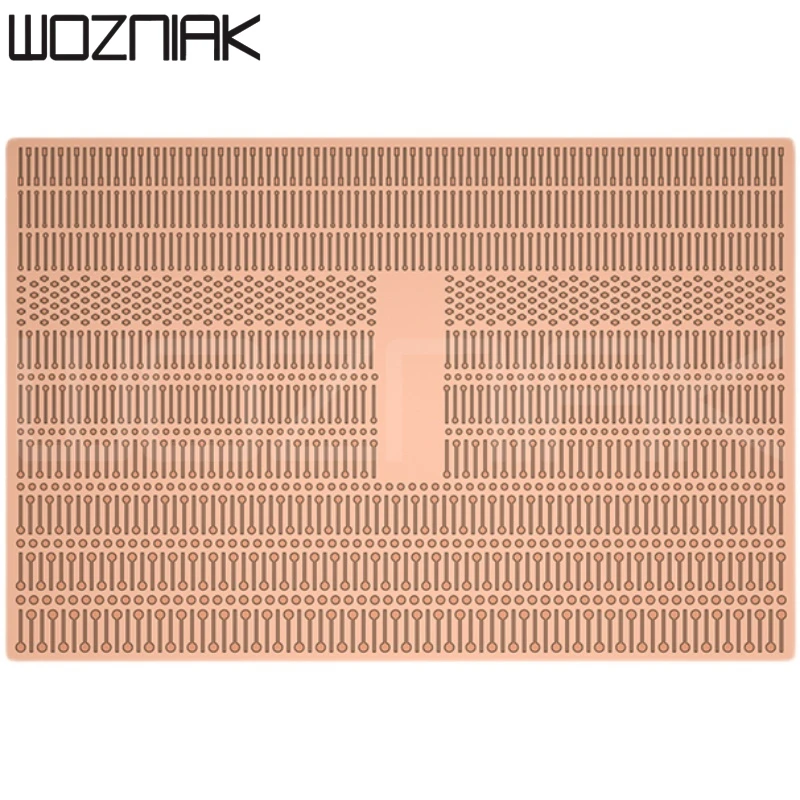
The ElectroCookie printed circuit boards (PCBs) I will be using for the LAoE projects are these:

We use the METCAL PS-900 Soldering Station for soldering.

We use the EEVblog BM2257 Digital Multimeter to test continuity.

We use the Horusdy Soldering Station with Hot Air Gun to shrink our head shrink.

We use the Hakko CHP 3C-SA Precision Tweezers for working the wire.

We use the Plato Model 170 Wire Cutter to cut things.

Thanks very much for watching! And please remember to hit like and subscribe! :)


Following is a product I use picked at random from my collection which may appear in my videos. Clicking through on this to find and click on the green affiliate links before purchasing from eBay or AliExpress is a great way to support the channel at no cost to you. Thanks!

Yum Cha 4pcs 30mm Deep Hole PenThis is an image of the product.notes

Let’s go shopping!

Electronics Project #15: Making Project Board for Learning the Art of Electronics | In The Lab

This post is part of my video blog and you can find more information about this video over here.

You can support this channel on Patreon: patreon.com/JohnElliotV

Silly Job Title: Joule Juggler.

In this video we make a project board for use in our Learning the Art of Electronics projects.

In the beginning I mention a few things which have arrived from AliExpress:

We use one of the ElectroCookie Large PCB Prototype Boards and attach female pin header and male pin header. The flux I use is AMTECH NC-559-ASM and my solder is Loctite (Multicore) 60/40 C511 5C 0.56mm.

We use the METCAL PS-900 Soldering Station to for soldering.

We use the Fluke 17B+ Digital Multimeter for continuity testing.

We use the Horusdy Soldering Station with Hot Air Gun to try to melt our flux, unsuccessfully. It turned out the problem I was having with the flux wasn’t that it had hardened in its tube, but that the nozzle had become clogged. When I cleared the nozzle the trouble I was having dispensing the flux went away and the flux flowed freely.

We use the Hakko CHP 3C-SA Precision Tweezers to place our pin header.

We use the Plato Model 170 Wire Cutter to cut solder.

Thanks very much for watching! And please remember to hit like and subscribe! :)


Following is a product I use picked at random from my collection which may appear in my videos. Clicking through on this to find and click on the green affiliate links before purchasing from eBay or AliExpress is a great way to support the channel at no cost to you. Thanks!

FNIRSI DC580 Power ModuleThis is an image of the product.

Let’s go shopping!

Interlude #17: Another False Start for Learning the Art of Electronics | In The Lab With Jay Jay

This post is part of my video blog and you can find more information about this video over here.

You can support this channel on Patreon: patreon.com/JohnElliotV

Silly Job Title: Current Curator.

In this video we make our second false start on Learning the Art of Electronics.

I mention about Make: magazine.

The power electronics YouTuber I mention is @ElectrArc240.

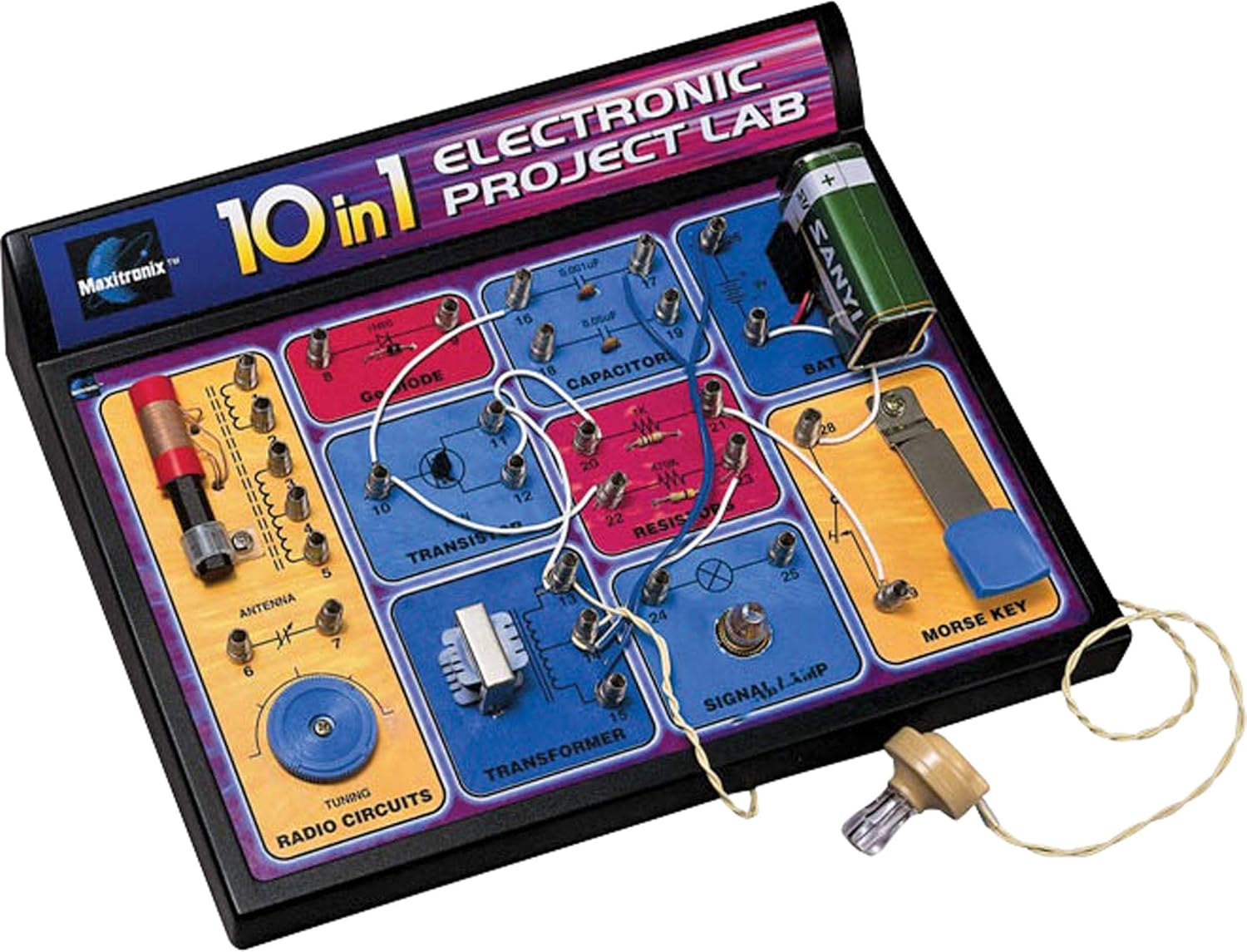
We consider using the Maxitronix 300in1 Electronics Project Lab Kit to for our project but we end up settling for a smaller breadboard.

We use the UNI-T UTi260B Thermal Imager to investigate the thermal properties of our powered circuits.

We use the Fluke 17B+ Digital Multimeter to measure voltage and current.

We use the EEVblog BM2257 Digital Multimeter to measure voltage and current.

We use the EEVblog BM036 Digital Multimeter to measure current.

We use the Peak Electronic Design Atlas DCA75 Pro Semiconductor Analyzer to examine our diodes.

We use the ANENG AN-999S Bench Multimeter to measure current.

We use the Riden RD6006 Bench Power Supply to provide power for our experiments.

We use the Carpenter Mechanical Pencil for writing out notes.

We use the Hakko CHP 3C-SA Precision Tweezers for working with small components.

Thanks very much for watching! And please remember to hit like and subscribe! :)


Following is a product I use picked at random from my collection which may appear in my videos. Clicking through on this to find and click on the green affiliate links before purchasing from eBay or AliExpress is a great way to support the channel at no cost to you. Thanks!

Yum Cha 6pcs Wire BrushThis is an image of the product.notes

Let’s go shopping!

Channel News #8: Update Regarding Upcoming Projects and Videos | In The Lab With Jay Jay

This post is part of my video blog and you can find more information about this video over here.

You can support this channel on Patreon: patreon.com/JohnElliotV

Silly Job Title: Capacitor Captain.

In this video I make excuses for why you haven’t had a video from me for two weeks. Excuses, excuses.

It is still my ambition to release three videos per week, on Tuesday, Thursday, and Saturday.

As I mention in the video I have been working away on the Learning the Art of Electronics project and making notes for all five of the referenced books but I still have a heap more work to do. Further, I’ve been working through the first edition of Learning the Art of Electronics because my second edition hasn’t arrived yet. So today I bit the bullet and canceled my order of the second edition from Amazon AU (I’ve been waiting since January) and placed a new order with Amazon US so my second edition should now be arriving by May 24, later this week.

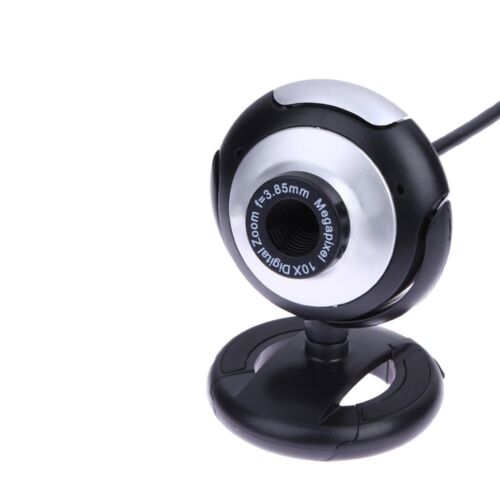
I have ordered some bits and pieces for my Logitech BRIO web cam including this stand, so I should be able to start making maths videos on my channel soon. But it will be very basic high school maths. If you want more serious maths I would be happy to recommend my friend who makes advanced maths videos on his channel Learning as a hobby.

Speaking of my mate on the Learning as a hobby channel he recently scored a copy of the CDROM that comes with Principles of Electronic Circuits 2ed and is making preparations to send me a copy (either as an ISO or in the snail mail), so standby for more on that. This is a super exciting development because I had concluded that finding a copy of this CDROM was going to be impossible, but here it is!

The long projects that I’m working on which are presently brewing include:

  • Silicon Chip and Jaycar Mini Project JMP003
  • Demo of EEVblog BM2257 multimeter
  • Old book teardown of Electric Circuits
  • Project #1 from Maxitronix 30in1
  • Lab #1 from Learning the Art of Electronics

I have made a start on all of the above but it’s going to take me some time to finish them all. In the mean time I am going to try to get some smaller projects done so that I can hit my target of three videos per week.

And that brings you up to date with news from the channel.

Thanks very much for watching! And please remember to hit like and subscribe! :)


Following is a product I use picked at random from my collection which may appear in my videos. Clicking through on this to find and click on the green affiliate links before purchasing from eBay or AliExpress is a great way to support the channel at no cost to you. Thanks!

Yum Cha 395nm UV LampThis is an image of the product.notes

Let’s go shopping!

Channel News #7: Announcing ITL Wiki and Pre-Reading for LtAoE | In The Lab With Jay Jay

This post is part of my video blog and you can find more information about this video over here.

You can support this channel on Patreon: patreon.com/JohnElliotV

Silly Job Title: Connector Kingpin.

In this video I tell you about the new ITL Wiki.

The notes for Learning the Art of Electronics are there: ITL Wiki § Learning the Art of Electronics.

I am running late with Lab #1 from Learning the Art of Electronics. That video was meant to come out today, but I’ve pushed it back to next Tuesday so I have time to prepare the notes and record the lab.

See you next Tuesday? :)

Thanks very much for watching! And please remember to hit like and subscribe! :)


Following is a product I use picked at random from my collection which may appear in my videos. Clicking through on this to find and click on the green affiliate links before purchasing from eBay or AliExpress is a great way to support the channel at no cost to you. Thanks!

Ausum 25 In 1 Precision Screwdriver SetThis is an image of the product.notes

Let’s go shopping!

Interlude #16: False Start for Learning the Art of Electronics | In The Lab With Jay Jay

This post is part of my video blog and you can find more information about this video over here.

You can support this channel on Patreon: patreon.com/JohnElliotV

Silly Job Title: Lightning Tamer.

This project’s homepage is here: John’s wiki § Learning the Art of Electronics.

This video is me making a false start on the Learning the Art of Electronics series which I am just about to embark on. What happened was after I got a bit more than two hours into recording the video for the first lab exercise I realized that it was taking too long with my approach. I didn’t want to make another twelve hour video! I was planning to go through the literature in painstaking detail and cover everything, but it turned out there was way too much material for that approach to be feasible.

What I am planning to do instead for the actual first video (due out next Tuesday) is do all the reading by myself in advance and then offer a brief summary and some recommended reading. I’m going to try to make the bulk of the video the actual practical experiment/circuit and leave the reading out.

But since I recorded the video for this “false start” I figured there’d be no harm in posting it by itself. Most of this video is the Appendix O material from The Art of Electronics 3ed which is a brief introduction to oscilloscopes.

In this video we mention CMOS technology, particularly MOSFETs.

We mention the Josephson effect which can cause a current to flow across superconductors in the absence of an applied voltage.

The SI size prefixes are documented on my wiki.

In this video we learn about voltage and current.

We take a close look at Appendix O in AoE which introduces the oscilloscope and mentions delay lines.

The oscilloscope appendix makes mention of Asimov’s short story from 1960, Thiotimoline and the Space Age.

We mention quantization, Planck units, and Zeno’s paradox.

I show you can illustration from Getting Started in Electronics.

If you’re planning to follow along with the series the pre-reading for the first video coming out on Tuesday is: E&M ch. 1, 2; PoEC ch. 1; AoE app. A, ch. 1; LtAoE ch. 1N, 1L.

Thanks very much for watching! And please remember to hit like and subscribe! :)


Following is a product I use picked at random from my collection which may appear in my videos. Clicking through on this to find and click on the green affiliate links before purchasing from eBay or AliExpress is a great way to support the channel at no cost to you. Thanks!

ANENG A3005 Pen Type Handheld MultimeterThis is an image of the product.notes

Let’s go shopping!