I have a new post on Hackaday: Investigating Soldering Iron Phantom Voltage.
Investigating Soldering Iron Phantom Voltage
Reply

I have a new post on Hackaday: Investigating Soldering Iron Phantom Voltage.
In the following video these products are used:
On an EEVblog video I learned about ChipQuik Alloy which has a low melting point for removing difficult SMT components with a soldering iron.
In his video EEVblog #186 – Soldering Tutorial Part 3 – Surface Mount Dave Jones says to use soldering iron temperature of 300°C to 350°C. He set his hot air gun at 350°C.
He also recommends 4x or 6x magnifications for 0402 SMD and recommends not to use them (or smaller) unless you have to because they can increase manufacturing costs due to being small and fiddly and requiring magnification during soldering. The smaller components can affect yield.
For solder he recommends 0.46mm solder (recommended Multicore brand). And flux. Always use flux.
Also he’s on the record as preferring a chisel tip. In this video he also demoed a thing called a “well tip“, which I have never seen or used before. Apparently good for drag soldering?
While I was researching this post I came across the Hakko Product Lineup, they have some nice looking kit!
p.s. in EEVblog #180 – Soldering Tutorial Part 1 – Tools Dave suggests solder in this order:
The first one with silver in it can be good for some SMT devices. The second one has a more stable melting point. The third is tried and tested but has variable range of melting points.
Note: sn = tin; pb = lead; ag = silver.
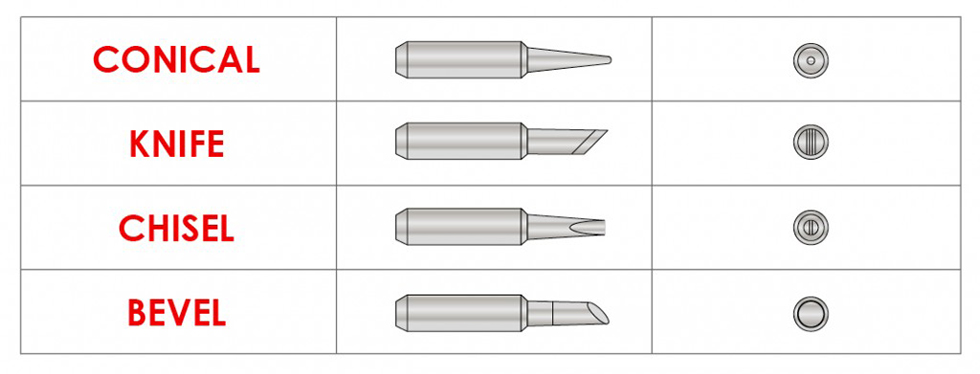
For my reference, there are Conical, Knife, Chisel, and Bevel iron tips.
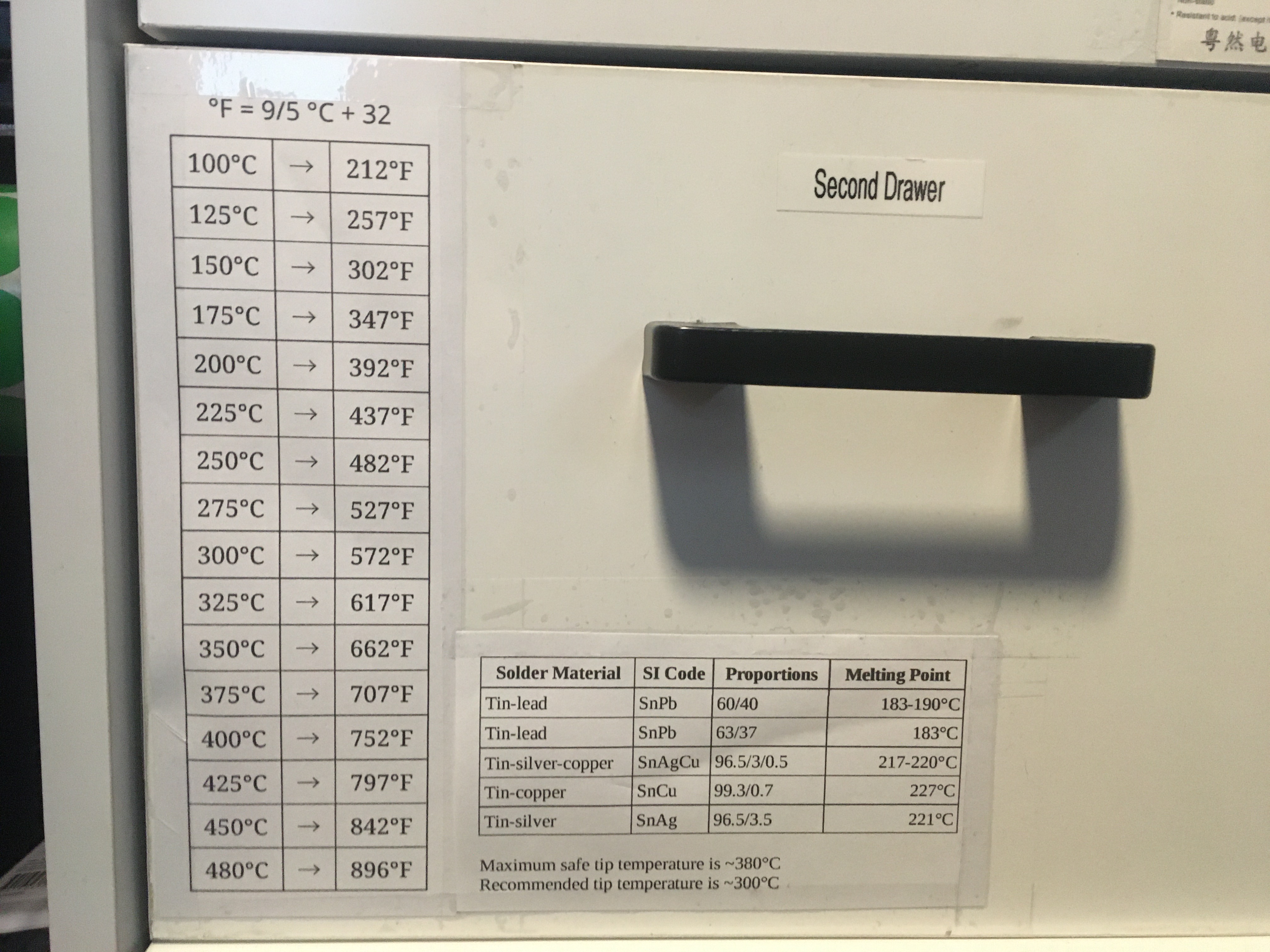
I have the info below taped to the front of my bench drawer, but I thought I would put it out there in text format for anyone who it might be useful to, so I made some notes over here: soldering temperature.
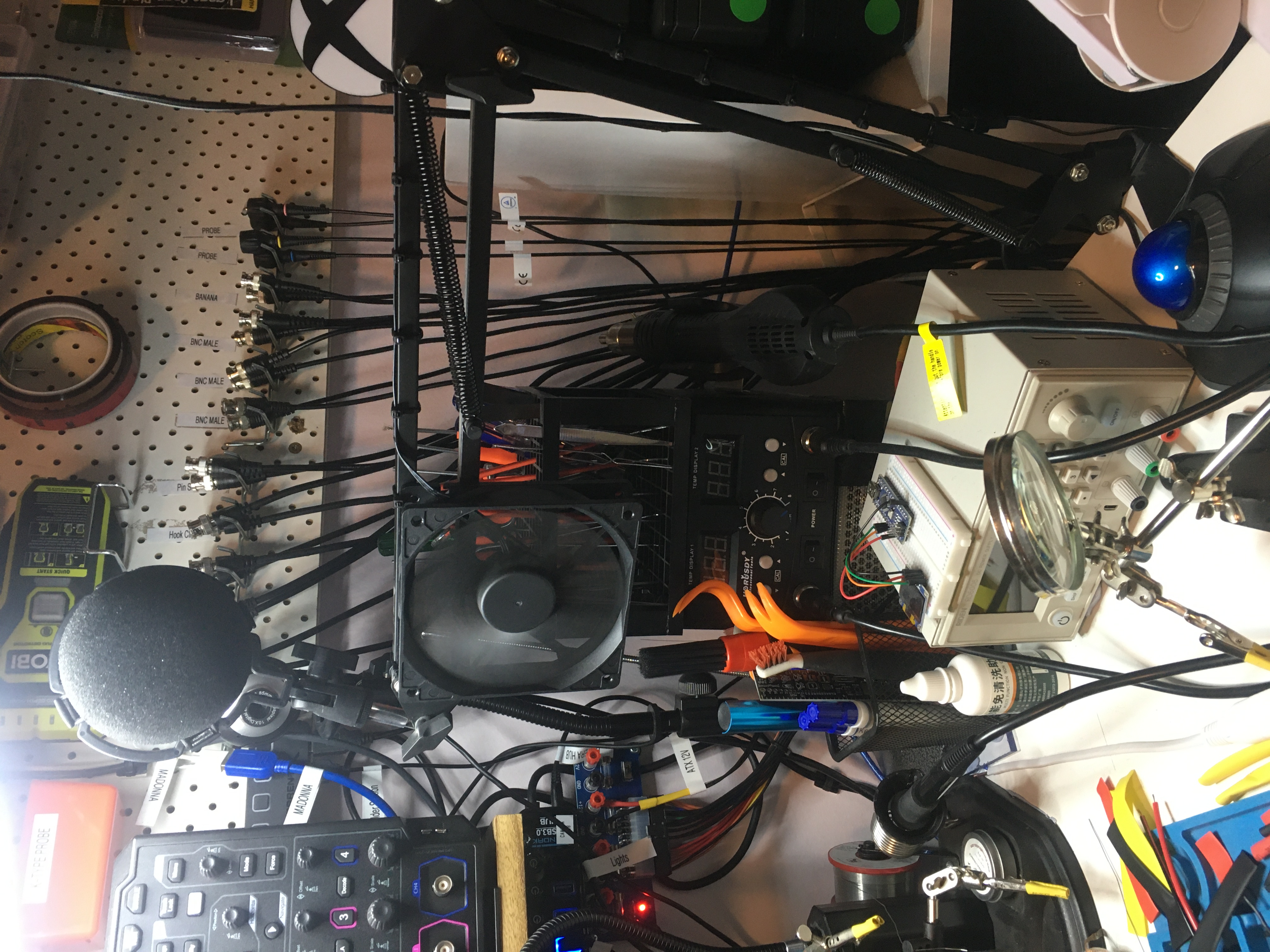
I bolted an old PC case fan to my microphone stand to act as an air extractor over my soldering station.