I have a new post on Hackaday: Working On Open-Source High-Speed Ethernet Switch.
Working On Open-Source High-Speed Ethernet Switch
Reply

I have a new post on Hackaday: Working On Open-Source High-Speed Ethernet Switch.
I had a question asking me how to get started in electronics. It’s a hard question to answer but I thought I might collect some thoughts in this blog post.
The first thing that comes into my head is that if you want to understand electronics you really need to build circuits. I started with electronics when I was ten years old and back then I was connecting batteries and light bulbs and using paperclips and thumb tacks for switches and terminals. After you learn a little about power, wiring, and circuits it’s time to learn about passive devices: resistors (bring down voltage and current), capacitors (pass AC but block DC, store energy), and inductors (pass DC but block AC, store energy). You don’t need to focus on inductors if you’re mostly in digital land. After you learn about passive components you need to learn about active devices including diodes and BJT transistors. After that you will get into other semiconductor stuff including FETs, SCRs, integrated circuits, microcontrollers, etc. Project kits are a great way to get circuits to build for practice, I would recommend the Maxitronix 300in1 but there are a billion options out there when it comes to electronics kits. I don’t think it matters much if you breadboard your circuits or solder them together, but it’s good to have practice with both approaches to circuit implementation. After you know one hundred different ways to flash an LED or emit a tone you are well on your way to understanding electronics.
The second thing that comes to mind is that you really want to have access to as much test equipment as you can get. You want to have at least two multimeters, if not more. If you’re on a budget buy some cheap multimeters (I have five of these) otherwise you can get something decent over on the EEVblog store. Then, if you can, get yourself the best oscilloscope you can afford. If you’re on a budget look for a handheld scope otherwise get something for the bench. Learning how to use your oscilloscope will be a challenge (there is a lot to know) but it’s good equipment to develop familiarity with and it will help you understand what is happening in your circuits better than anything else.
Over on the website for In The Lab With Jay Jay you can get a chronological report of my equipment which roughly indicates what sort of stuff you probably want to buy first. But it’s very rough because some things I already had aren’t listed and some things I got aren’t necessary. But it’s at least some indication of what you might like to buy to facilitate your journey into electronics.
The third thing that comes to mind is make sure you have somewhere to ask questions! I would recommend the Beginners Forum over on the EEVblog forums, but there are heaps of other places to go on the internet. I don’t use it but the Electrical Engineering Stack Exchange is probably decent. If you’re down with IRC check out ##electronics on libera.chat.
The fourth thing that comes to mind is that a little math never hurt anyone who was trying to learn electronics. It’s best if you know enough algebra to know that if P=IV and V=IR then P=I2R. Also good to know is trigonometry and calculus. But you can limp along without much mathematics as long as you’re willing to make circuits and proceed through trial and error. Empiricism trumps analysis. Related to this: you should know the Greek alphabet, both uppercase and lowercase; you should start with knowing the letters and how to pronounce them, and eventually you should learn what they mean when they’re used in electronics. The main one to be familiar with is Ω for Ohms, but you should know all the rest too, including Δ, Σ, λ, ε, µ, π, and θ.
The fifth thing that comes to mind, which is nevertheless very important, is that you should read as much as you possibly can. I have hundreds of electronics books but if I had to pick some books for absolute beginners I would pick something like this:
Also if you can get your hands on a product catalog from your local electronics store you can flip through and look at all of the components that are available. This is a pretty good (and cheap!) way to survey the territory. In Australia it’s these:
The sixth thing I will say is that if you want to learn electronics, given that it is now the year 2025, watch YouTube videos! There are videos on YouTube for all levels: beginner, intermediate, and advanced. I have a few playlists on YouTube which are beginner friendly, including these:
And the last thing I will say is: be patient. There is a lot to learn and it will take a long time to learn it. Don’t try to start at the end. Just go through the process, doing the activities, reading, watching, and making circuits, and your familiarity with the subject matter will grow.
Good luck!
This post is part of my video blog and you can find more information about this video over here.
You can support this channel on Patreon: patreon.com/JohnElliotV
Silly Job Title: Capacitor Captain.
In this video I make excuses for why you haven’t had a video from me for two weeks. Excuses, excuses.
It is still my ambition to release three videos per week, on Tuesday, Thursday, and Saturday.
As I mention in the video I have been working away on the Learning the Art of Electronics project and making notes for all five of the referenced books but I still have a heap more work to do. Further, I’ve been working through the first edition of Learning the Art of Electronics because my second edition hasn’t arrived yet. So today I bit the bullet and canceled my order of the second edition from Amazon AU (I’ve been waiting since January) and placed a new order with Amazon US so my second edition should now be arriving by May 24, later this week.
I have ordered some bits and pieces for my Logitech BRIO web cam including this stand, so I should be able to start making maths videos on my channel soon. But it will be very basic high school maths. If you want more serious maths I would be happy to recommend my friend who makes advanced maths videos on his channel Learning as a hobby.
Speaking of my mate on the Learning as a hobby channel he recently scored a copy of the CDROM that comes with Principles of Electronic Circuits 2ed and is making preparations to send me a copy (either as an ISO or in the snail mail), so standby for more on that. This is a super exciting development because I had concluded that finding a copy of this CDROM was going to be impossible, but here it is!
The long projects that I’m working on which are presently brewing include:
I have made a start on all of the above but it’s going to take me some time to finish them all. In the mean time I am going to try to get some smaller projects done so that I can hit my target of three videos per week.
And that brings you up to date with news from the channel.
Thanks very much for watching! And please remember to hit like and subscribe! :)
Following is a product I use picked at random from my collection which may appear in my videos. Clicking through on this to find and click on the green affiliate links before purchasing from eBay or AliExpress is a great way to support the channel at no cost to you. Thanks!
Yum Cha 395nm UV Lamp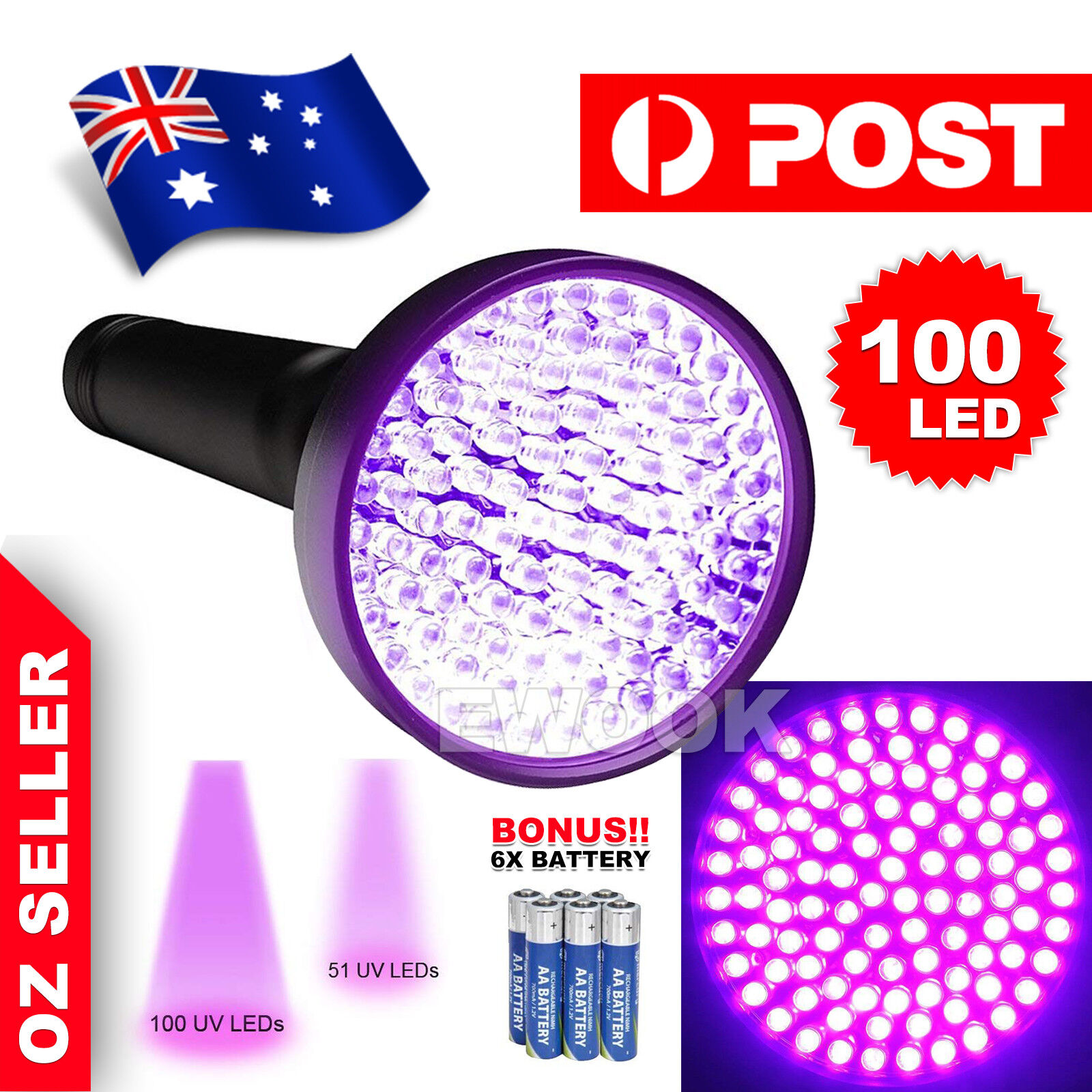 notes notes |
Let’s go shopping!
I have a new post on Hackaday: PentaPico: A Pi Pico Cluster For Image Convolution.
I have a new post on Hackaday: In Memory Of Ed Smylie, Whose Famous Hack Saved The Apollo 13 Crew.
A comment from Joe W refers us to this: 13 Minutes to the Moon.
Today I learned about the ORBTrace mini. Gotta get me a few of those! There’s a video explaining the related software, Orbuculum, over here (but it requires you signup for a free account and validate your email address to watch).
I have a new post on Hackaday: Making Sure The Basement Stays Dry With An ESP8266.
I have a new post on Hackaday: New Bismuth Transistor Runs 40% Faster And Uses 10% Less Power.
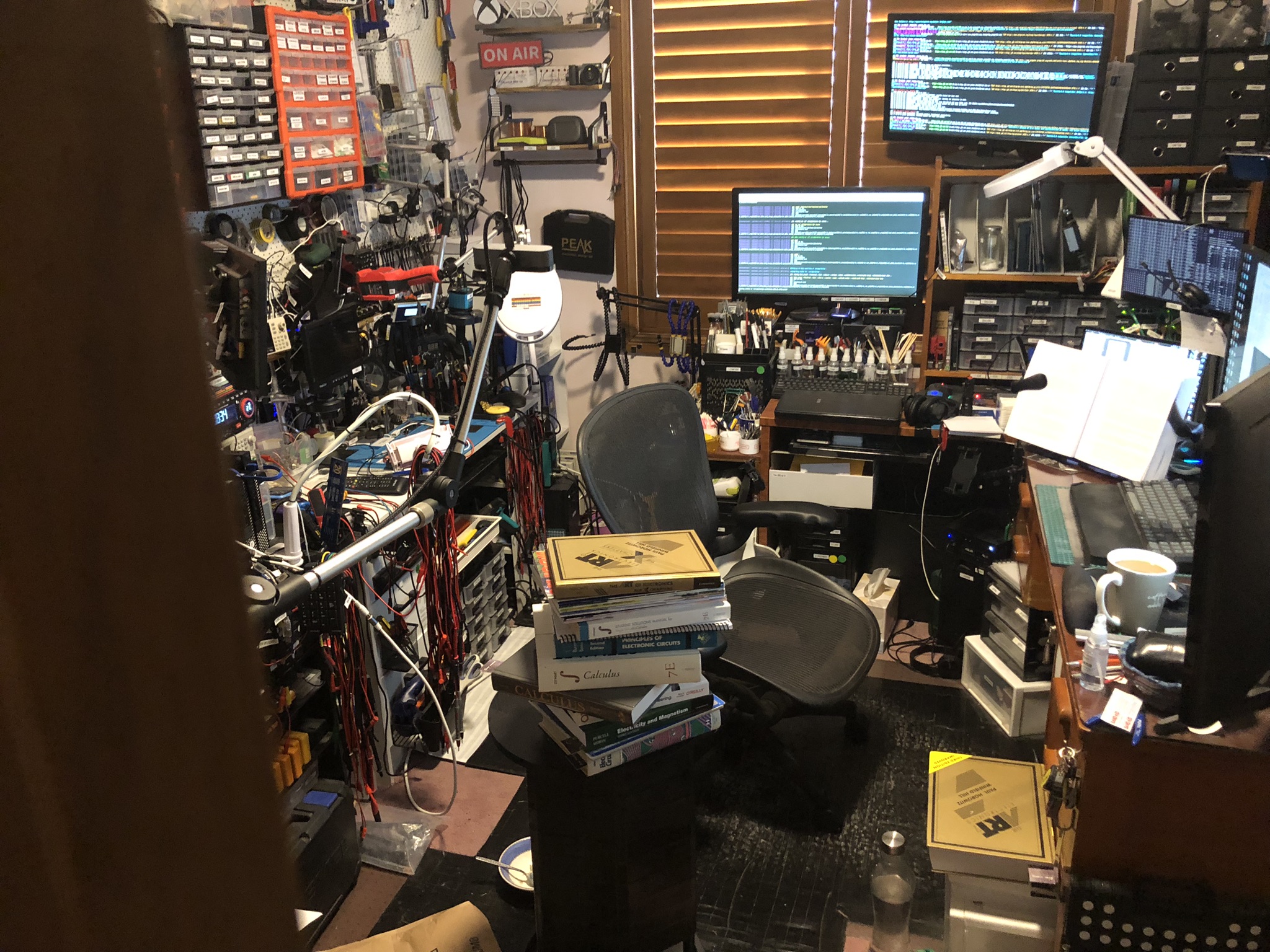
You know it’s serious when the books are out. This is me trying to catch up with my notes for my Learning the Art of Electronics project, which I am terribly far behind on…
This was a good overview of what’s possible with statistics: Statistician Answers Stats Questions From Twitter | Tech Support | WIRED.
But I’m pretty sure that at t=11:23 he gets it wrong. The probability that three people in a family have the same birthday isn’t 1 * 1/365 * 1/365. but rather it depends on the number of people in the family (starting, I guess, at some epoch). This is known as the Birthday paradox.
To be clear: they’re not asking what is the probability of three people being born on January 10. They asked what are the odds of three people from an unspecified family size being born on the same day (could be any day of the year).