New Book Teardown #4: Beginner’s Guide to Reading Schematics 4th Edition (2018) | In The Lab

This post is part of my video blog and you can find more information about this video on this show’s homepage which is here.

You can support this channel on Patreon: patreon.com/JohnElliotV

Silly Job Title: Electron Enchanter

This video is part of the New Book Teardown feature of my video blog.

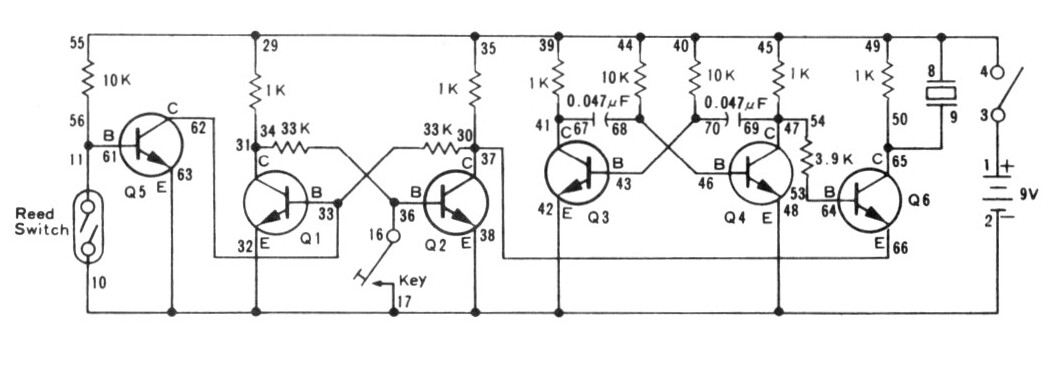
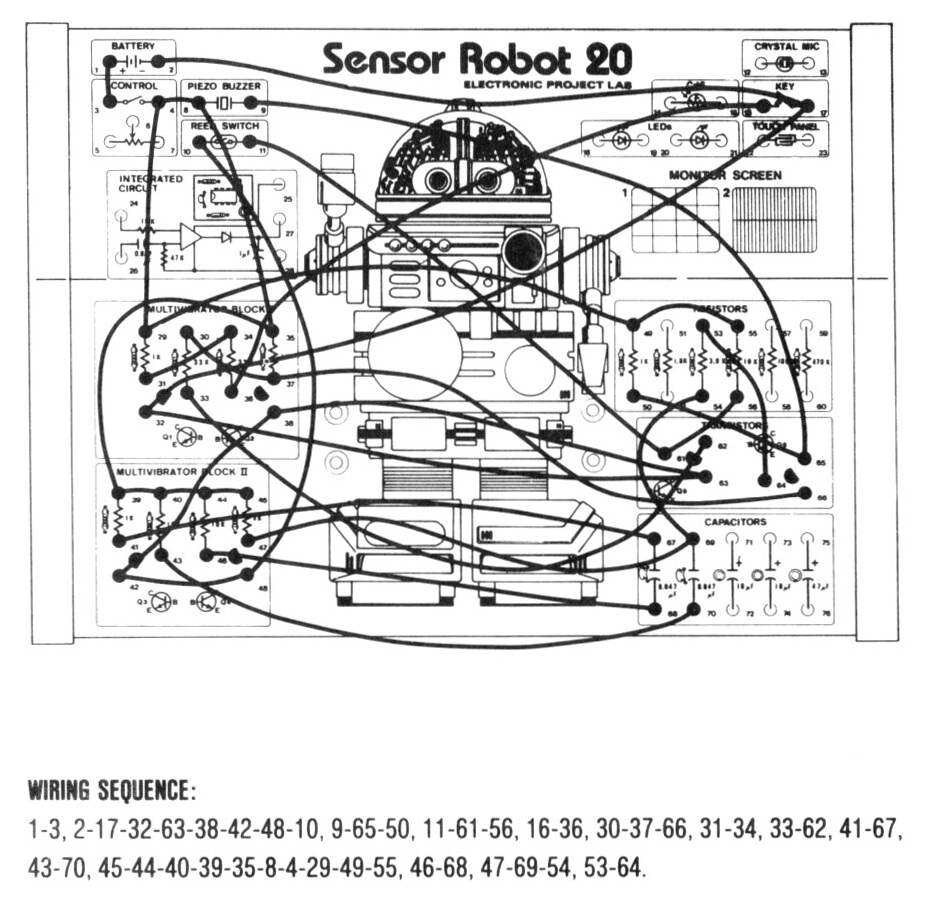
In this video I take a look at Beginner’s Guide to Reading Schematics, Fourth Edition by Stan Gibilisco published in 2018. The book has 209 pages.

Some things which came up during the video:

From the Wikipedia article on Bifilar coil: A bifilar coil is an electromagnetic coil that contains two closely spaced, parallel windings. In electrical engineering, the word bifilar describes wire which is made of two filaments or strands. It is commonly used to denote special types of winding wire for transformers. Wire can be purchased in bifilar form, usually as different colored enameled wire bonded together. For three strands, the term trifilar coil is used.

From the Wikipedia article on Power dividers and directional couplers: Power dividers (also power splitters and, when used in reverse, power combiners) and directional couplers are passive devices used mostly in the field of radio technology. They couple a defined amount of the electromagnetic power in a transmission line to a port enabling the signal to be used in another circuit. An essential feature of directional couplers is that they only couple power flowing in one direction. Power entering the output port is coupled to the isolated port but not to the coupled port. A directional coupler designed to split power equally between two ports is called a hybrid coupler.

From the Wikipedia article on Waveguide: A waveguide is a structure that guides waves by restricting the transmission of energy to one direction. Common types of waveguides include acoustic waveguides which direct sound, optical waveguides which direct light, and radio-frequency waveguides which direct electromagnetic waves other than light like radio waves.

The list of parts suppliers from the back of the book (some have closed down):

The books from the suggested additional reading:

The author’s website is here: https://www.sciencewriter.net/

Thanks very much for watching! And please remember to hit like and subscribe!


Following is a product I use picked at random from my collection which may appear in my videos. Clicking through on this to find and click on the green affiliate links before purchasing from eBay or AliExpress is a great way to support the channel at no cost to you. Thanks!

Yum Cha Telescopic Magnetic Pickup With LightThis is an image of the product.

Let’s go shopping!

And… here we are

This week what we have all been fearing has happened to me: GitHub Copilot generated code for me which seems to meet all the requirements but which I don’t understand very much at all.

To date GitHub Copilot for me has just been mostly a useful auto-complete tool and it hasn’t given me any code which I didn’t understand. But with this code (to control two different hardware timers/counters on my Arduino) I don’t really understand it at all. I have passing familiarity with some of the registers used because I saw them named in the datasheet (which I have only skimmed so far) but basically I don’t understand how this works.

It is tempting to ignore the fact that I don’t fully understand and move on, but there’s a part of me which wants to return to the datasheet so I can understand what every assignment GitHub Copilot offered actually does and what every value it calculated implies. Is that the best use of my time?

Embedded Systems with ARM Cortex-M Microcontrollers in Assembly Language and C

Today I learned about Embedded Systems with ARM Cortex-M Microcontrollers in Assembly Language and C (Fourth Edition) by Yifeng Zhu while watching Lecture 9: Interrupts on YouTube. The full list of associated lectures are here: Short Lectures.