This video about the discovery of oxygen is interesting: This IMPOSSIBLE Theory Led to the Discovery of Oxygen.
Category Archives: Internet
Introducing Learning the Art of Electronics | Learning Electronics In The Lab With Jay Jay
This post is part of my video blog and you can find more information about this video over here.
You can support this channel on Patreon: patreon.com/JohnElliotV
This project’s homepage is here: John’s wiki § Learning the Art of Electronics.
In this video we introduce a new feature of the show. In these segments we will be working through Learning the Art of Electronics.
We will be doing a total of 27 videos for this feature. 25 labs, this introduction, and a conclusion. Videos will come out on the first Tuesday of every month (hopefully!).
We did a new book teardown for this book last year: New Book Teardown #3: Learning The Art of Electronics: A Hands-On Lab Course (2016) | In The Lab. You can see in the comments a number of people encouraged me to make videos for this book, so that’s what we’re doing now.
Also a shout out to my mate over on Learning as a hobby for encouraging me to undertake this project.
Thanks very much for watching! And please remember to hit like and subscribe! :)
Following is a product I use picked at random from my collection which may appear in my videos. Clicking through on this to find and click on the green affiliate links before purchasing from eBay or AliExpress is a great way to support the channel at no cost to you. Thanks!
JST XH2.54 6pin Pre-crimped Connector![]() |
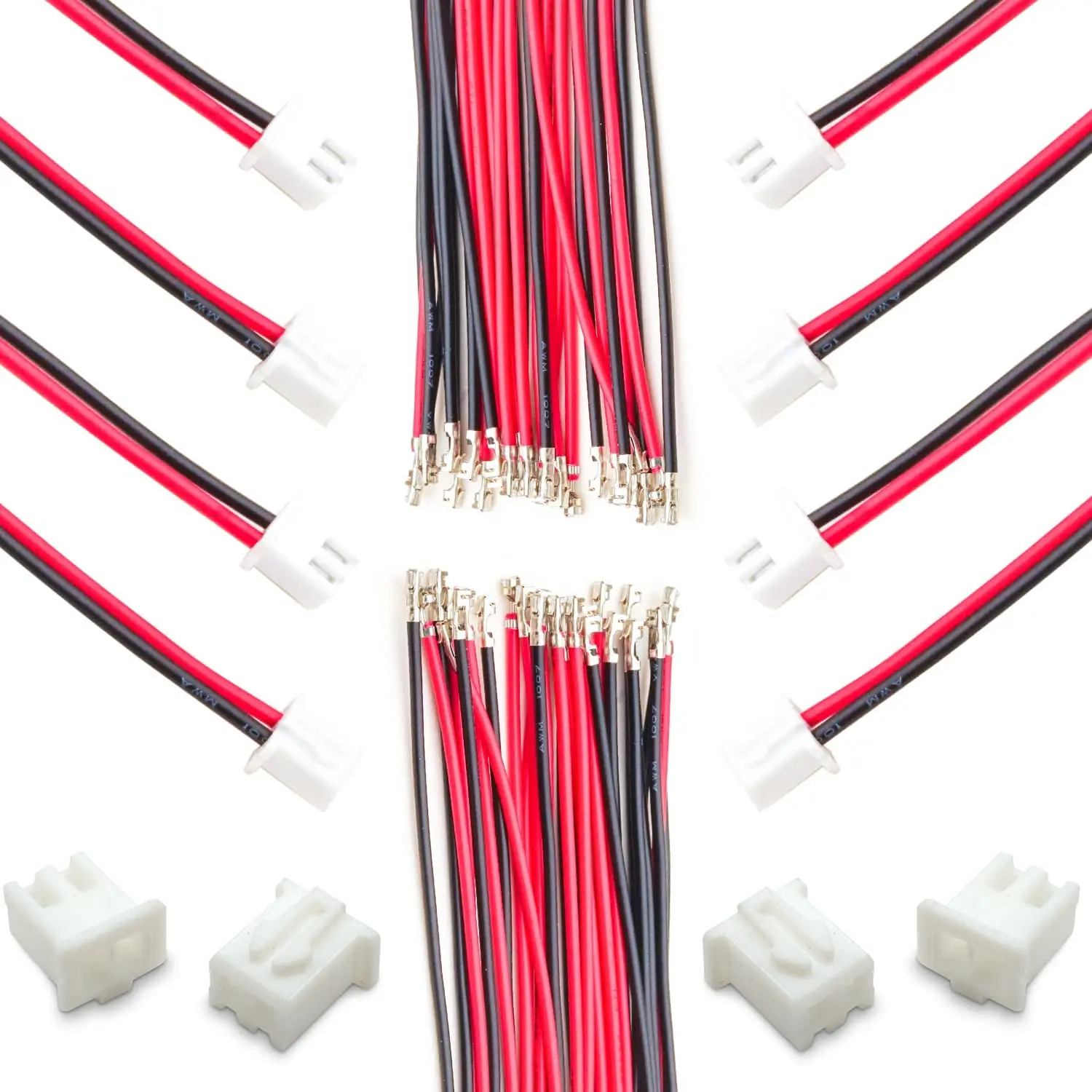
Let’s go shopping!
All You Need To Know About The Diode Test Mode On Your Multimeter To Fix Stuff
Today I watched All You Need To Know About The Diode Test Mode On Your Multimeter To Fix Stuff. Richard listed some typical forward voltages across various types of diodes:
- Schottky Diode ~ 0.15V
- Germanium Diode ~ 0.22V – 0.28V
- Fast Switching Diode ~ 0.4V – 0.45V
- Silicon Diode ~ 0.5V – 0.6V
- Red LED ~ 1.7V – 1.8V
- Yellow LED ~ 1.8V
- Green LED ~ 2.2V – 2.3V
10 Things I Wish I Knew When I Started Microsoldering
I really enjoyed watching this video: 10 Things I Wish I Knew When I Started Microsoldering. The ten things are:
- You can only learn by actually working on motherboards
- You can actually get good quality tools (for cheap) from AliExpress
- Just because a tool works well for someone else doesn’t mean it will work well for you
- 90% of good soldering comes from having an understanding how heat works and how heat dissipates
- All the pros that you see on YouTube are still learning too!
- Know your limits, there are some problems you can’t fix
- Some things aren’t worth fixing because of the time and effort and cost involved, but sometimes things are worth fixing just for practice and learning purposes
- BGA work isn’t as scary as it seems or is made out to be
- Buy your consumables in bulk
- Spend time learning from pros on YouTube!
Texas Instruments Datasheets
I was watching The Differential Pair Becomes an Op-Amp – Transistors 101, episode 18 and they mentioned this datasheet: https://ti.com/lit/ds/symlink/lm358.pdf. That URL looks very hacker friendly to me, if you know what you’re looking for you can probably guess the URL! I haven’t tried this in anger yet, this is just a note for Future John.
Power for XR2206 and ICL8038 signal generators
The Art of Electronics
I am having a conversation over on New Book Teardown #3: Learning The Art of Electronics: A Hands-On Lab Course (2016) | In The Lab and I was asked about the various books that carry the title “art of electronics”, they are:
- The Art of Electronics by Paul Horowitz and Winfield Hill currently in its 3rd edition. This masterpiece of electronics literature was first published in 1980 and has been the go-to book for anyone interested in learning about electronics ever since. It’s the textbook for many university electronics courses. The 3rd edition of the book was published in 2015.
- The Art of Electronics: The x-Chapters also written by Paul Horowitz and Winfield Hill is a collection of supplementary material that didn’t make it into the 3rd edition of The Art of Electronics.
- Learning the Art of Electronics is a companion book that provides a structured introduction to electronics through a collection of 25 lab exercises. It’s the coursework for many university electronics courses. The 1st edition by Thomas C. Hayes and Paul Horowitz was published in 2016. The 2nd edition by Thomas C. Hayes and David Abrams comes out in 2025.
Mail Call #27: Calibration Circuits, Battery Holders, Analog Meters and More from AliExpress
This post is part of my video blog and you can find more information about this video over here.
You can support this channel on Patreon: patreon.com/JohnElliotV
In this video we open the following in the mail from AliExpress.
- AD584 Reference Voltage Source 10V Voltage Reference AD584JH AD584LH AD584KH / Resistor Capacitor Board Calibration Multimeter (AD584LH, Resistor Board)
- 60pcs Silver M3-M12 304 Wire Thread Insert Repair Kit Set Stainless Steel Spiral For Hardware Repair Tools Easy Install
- 10pcs 5V 1A 18650 Lithium Battery Charging Board TP4056 Lithium Charging Mini/Micro USB Type C Charge Module With Protect (10pcs type C)
- 18650 Battery Case Holder with Wire Bundle,10PCS DIY Battery Storage Boxes, 18650 1 Bay Cell Battery Holder, 1 Slots 10pcs (10pcs)
- ESP32-C3 SuperMini WiFi Bluetooth-Compatible Board ESP32 C3 SuperMini Development Board IOT Board for Arduino (Welded)
- 5pcs Type C PD2.0 PD3.0 Fast Charge Trigger Polling Detector USB Boost Power Supply Change Module Charger Board Diymore
- 10Pcs 30V Diagnostic Tools Multimeter Test Lead Extention Back Piercing Needle Tip Probes Car Automotive Test Probe Kit 0.7MM (Mixed 4pcs)
- 0.91 Inch OLED Module 0.91″ White/Blue 128X32 OLED LCD LED Display Module IIC Communicate for Ardunio (White, Blue)
- ESP32-C3 OLED development board with 0.42 inch OLED module ceramic antenna ESP32 supermini development board wifi Bluetooth
- ESP32-C3 MINI Development Board ESP32 SuperMini Development Board ESP32-C3 Development Board WiFi Bluetooth Expansion Board (1 Set)
- MECHANIC Aax-17 tin positioning tweezers for precise clamping of tin wire, non-slip and wear-resistant, made of stainless steel
- 91C4 Class Ampere Analog Panel Meter Ammeter 2.5 Accuracy DC 50uA 100uA 200uA 300uA 500uA High Quality (100uA)
- 91C4- mA DC Pointer type milliammeter 1mA 5mA 10mA 50mA 100mA 200mA 300mA 500mA Analog Mechanics Plate table Ammeter (1mA, 10mA, 100mA)
- 91C4 Ammeter DC Analog 1A 2A 3A 5A 10A 20A 30A 50A 100A 200A 300A 500A Panel Mechanical Pointer Type Amper Meter Current Meter (1A)
- DC Ampere Meter 91C4 Ammeter 1/2/3/5/10/20/30/50/100/200 A V Voltmeter Analog Panel Meter Mechanical Pointer 91C4 Ammeter (5V, 10V, 15V)
- JX 1PCS BNC Male Plug to Dual Hook Clip Alligator Clip Banana Plug Test Lead for For oscilloscope/multimeter (No 1, No 2, No 3)
As I mention in the video I learned about the AD584LH and Resistor Board over here: Brymen BM789 Unboxing and Review.
Thanks very much for watching! And please remember to hit like and subscribe! :)
Following is a product I use picked at random from my collection which may appear in my videos. Clicking through on this to find and click on the green affiliate links before purchasing from eBay or AliExpress is a great way to support the channel at no cost to you. Thanks!
Yum Cha 100pc Titanium Plated Drill Bits notes |
Let’s go shopping!
5 Methods for Differential Equations
This was interesting: Physics Students Need to Know These 5 Methods for Differential Equations. It mentioned List of Laplace transforms. Also it looks like duckduckgo has a new “Assist” feature!
How to Remember Everything You Read
I am officially a fan of @JustinSung. Recently I watched How to Remember Everything You Read. His process PACER is:
- Procedural (how to) -> Practice (actually do the thing)
- Analogous (relating to what we already know) -> Critique (how good is the analogy)
- Conceptual (the what, facts, relationships, etc) -> Mapping (e.g. mind mapping, diagrams)
- Evidence (makes conceptual information more concrete) -> Store and Rehearse (solve problems, answer questions)
- Reference (nitty gritty specifics) -> Store and Rehearse (as with Evidence, consider flash cards)