Today I happened upon this ATTiny85 Quick Reference.
Category Archives: Web
ChipQuik Alloy
On an EEVblog video I learned about ChipQuik Alloy which has a low melting point for removing difficult SMT components with a soldering iron.
Soldering tips from Dave Jones
In his video EEVblog #186 – Soldering Tutorial Part 3 – Surface Mount Dave Jones says to use soldering iron temperature of 300°C to 350°C. He set his hot air gun at 350°C.
He also recommends 4x or 6x magnifications for 0402 SMD and recommends not to use them (or smaller) unless you have to because they can increase manufacturing costs due to being small and fiddly and requiring magnification during soldering. The smaller components can affect yield.
For solder he recommends 0.46mm solder (recommended Multicore brand). And flux. Always use flux.
Also he’s on the record as preferring a chisel tip. In this video he also demoed a thing called a “well tip“, which I have never seen or used before. Apparently good for drag soldering?
While I was researching this post I came across the Hakko Product Lineup, they have some nice looking kit!
p.s. in EEVblog #180 – Soldering Tutorial Part 1 – Tools Dave suggests solder in this order:
- 62sn/36pb/2ag
- 63sn/37pb
- 60sn/40pb
The first one with silver in it can be good for some SMT devices. The second one has a more stable melting point. The third is tried and tested but has variable range of melting points.
Note: sn = tin; pb = lead; ag = silver.
Learning LTspice
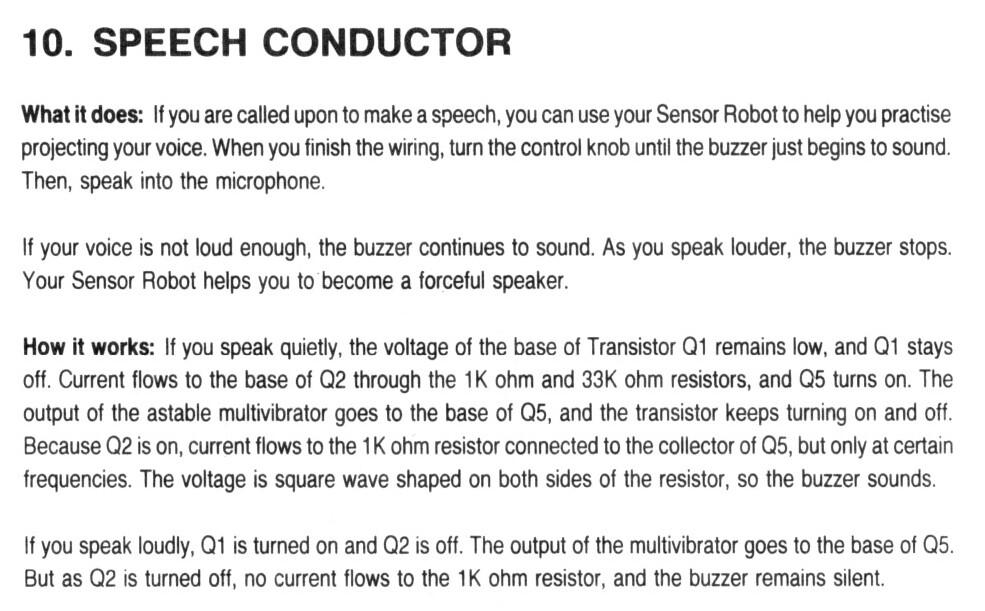
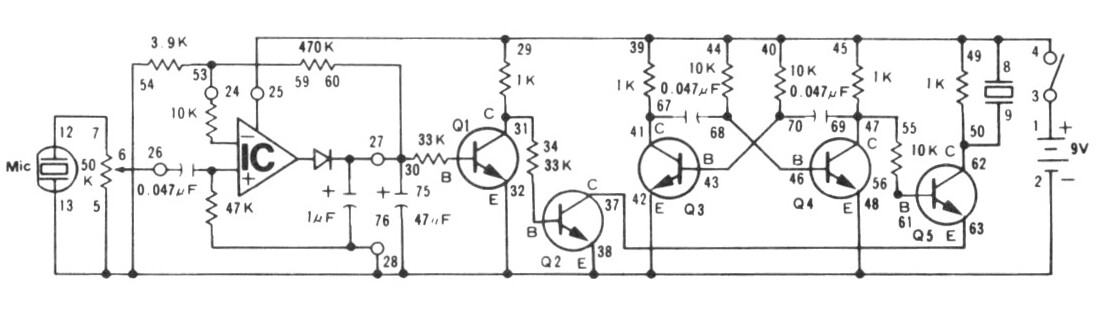
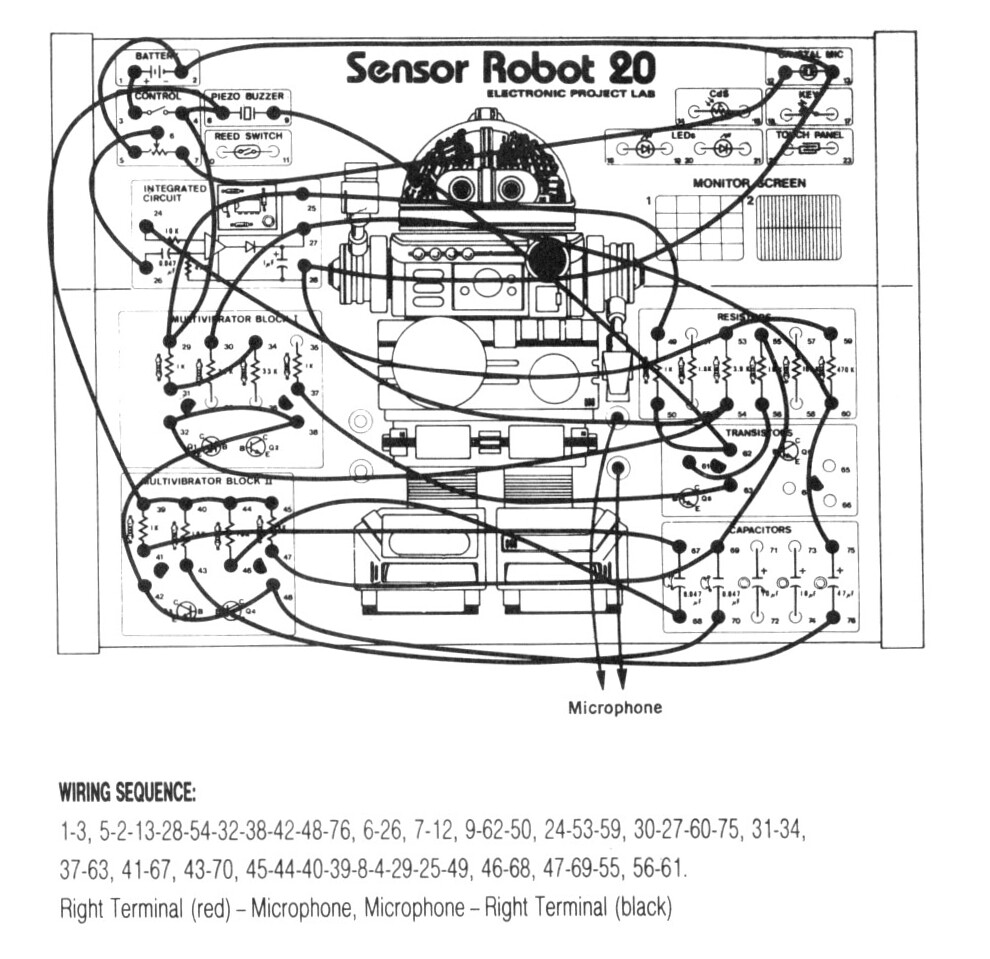
Shot In The Dark II | Project 8/20 | Maxitronix 20in1 | Learning Electronics In The Lab With Jay Jay
This post is part of my video blog and you can find more information about this video on this show’s homepage which is here.
You can support this channel on Patreon: patreon.com/JohnElliotV
In this video I do the eighth Maxitronix 20in1 Electronic Project Lab project: Shot In The Dark II.
This article will tell you all about anodes and cathodes of capacitors: 19.3: Electrochemical Cells
The Veritasium video about the number 37 which I mention is this one: Why is this number everywhere?
Thanks very much for watching! And please remember to hit like and subscribe!
Following is a product I use picked at random from my collection which may appear in my videos. Clicking through on this to find and click on the green affiliate links before purchasing from eBay or AliExpress is a great way to support the channel at no cost to you. Thanks!
Oloey Safety Goggles notes |
Let’s go shopping!
The 6502 Instruction Set Database
This is great: The 6502 Instruction Set Database. It’s a database with details of opcodes for the 6502 processor. You can see the SQL and TSV.
Extra Content #7: The SCSI Bus and IDE Interface: Protocols, Applications and Programming
This post is part of my video blog: In The Lab With Jay Jay.
You can support this channel on Patreon: patreon.com/JohnElliotV
In this video I pull the floppy disk out of the cover of my copy of The SCSI Bus and IDE Interface: Protocols, Applications and Programming (2nd Edition).
I have this wonderful old book The SCSI Bus and IDE Interface: Protocols, Applications and Programming (2nd Edition). It was published in 1997 but is still available for purchase through Amazon.
The book comes with a floppy disk (that’s right: a floppy disk!). I had to buy a USB floppy disk drive to read it. I have made the content from the disk available in a tarball, here: scsi.tgz.
If you just want to read the files, those are here:
Following is a list of products I use which may appear in my videos. Clicking through on these links before purchasing from Amazon, eBay, or AliExpress is a great way to support the channel at no cost to you. Thanks!
Let’s go shopping!
New Book Teardown #3: Learning The Art of Electronics: A Hands-On Lab Course (2016) | In The Lab
This post is part of my video blog and you can find more information about this video on this show’s homepage which is here.
You can support this channel on Patreon: patreon.com/JohnElliotV
Silly Job Title: Master Planner
This video is part of the New Book Teardown feature of my video blog.
In this video I take a look at Learning the Art of Electronics: A Hands-On Lab Course by Thomas C. Hayes and Paul Horowitz published in 2016. The book has 1,140 pages and is a companion to The Art of Electronics 3rd Edition.
Some notes about things of interest we noticed in the book:
- Xilinx was an American technology and semiconductor company, now owned by AMD
- the Ebers–Moll model is useful for modelling Bipolar junction transistors
- Hysteresis is the dependence of the state of a system on its history
- Wien’s bridge is used for precision measurement of capacitance in terms of resistance and frequency
- Wilson current mirror is a three-terminal circuit that accepts an input current at the input terminal and provides a “mirrored” current source or sink output at the output terminal
- a Bessel filter is a type of analog linear filter named in reference to Friedrich Bessel who developed the mathematical theory
- the video about the 6502 I watched recently is: The 6502 CPU Powered a Whole Generation!
- the Cypress PSoC is a family of microcontroller integrated circuits by Cypress Semiconductor
- octopart.com
- learningtheartofelectronics.com
Thanks very much for watching! And please remember to hit like and subscribe!
Update Jan 2025: Hi there. You might be interested to know that the second edition of this book is due to ship in March 2025! Can’t wait! https://learningtheartofelectronics.com/
If you want to pre-order a new version you can do so here:
US: https://www.amazon.com/dp/1009535188
UK: https://www.amazon.co.uk/dp/1009535188
AU: https://www.amazon.com.au/dp/1009535188
Following is a product I use picked at random from my collection which may appear in my videos. Clicking through on this to find and click on the green affiliate links before purchasing from eBay or AliExpress is a great way to support the channel at no cost to you. Thanks!
Yum Cha Blue Spudgers![]() |
Let’s go shopping!
EEVblog #63 – Microchip PIC vs Atmel AVR
Today I stumbled upon some vintage Dave Jones which made me happy: EEVblog #63 – Microchip PIC vs Atmel AVR. :)
Make: AVR Programming
I am reading Make: AVR Programming: Learning to Write Software for Hardware and I found this excellent video: Programming AVR Microcontrollers in C – O’Reilly Webcast available from here: Beyond the Arduino: Programming AVR Microcontrollers in C.
The author’s github page is still operational: https://github.com/hexagon5un/AVR-Programming
Their website littlehacks.org is offline but still available via archive.org: https://web.archive.org/web/20160307235812/http://littlehacks.org/
Also there’s this really cool collection of projects over here: Cornell University ECE 4760 Designing with Microcontrollers Final Projects.