Thanks very much for watching! And please remember to hit like and subscribe! :)
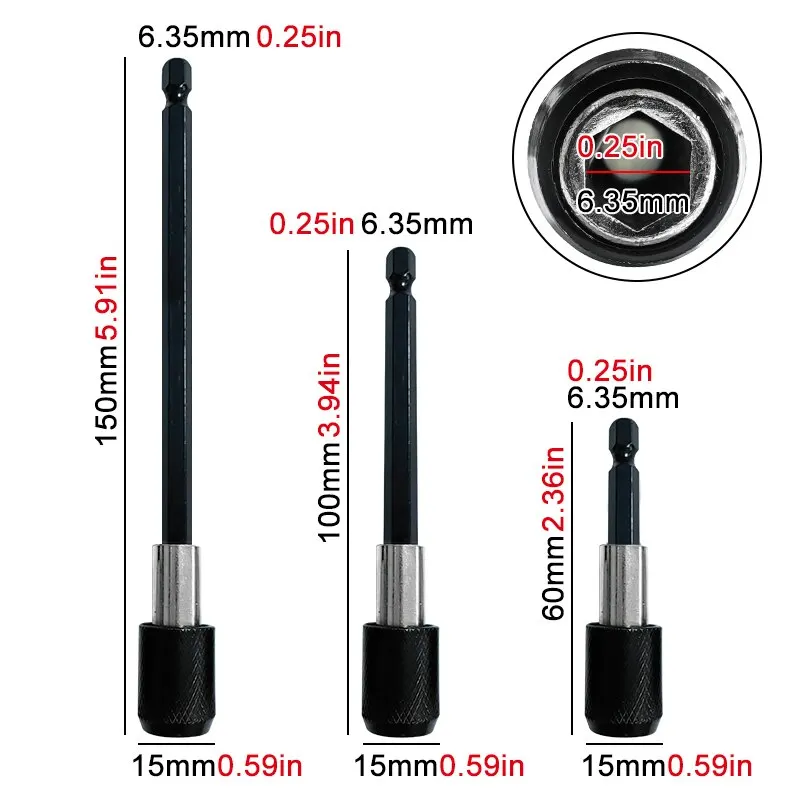
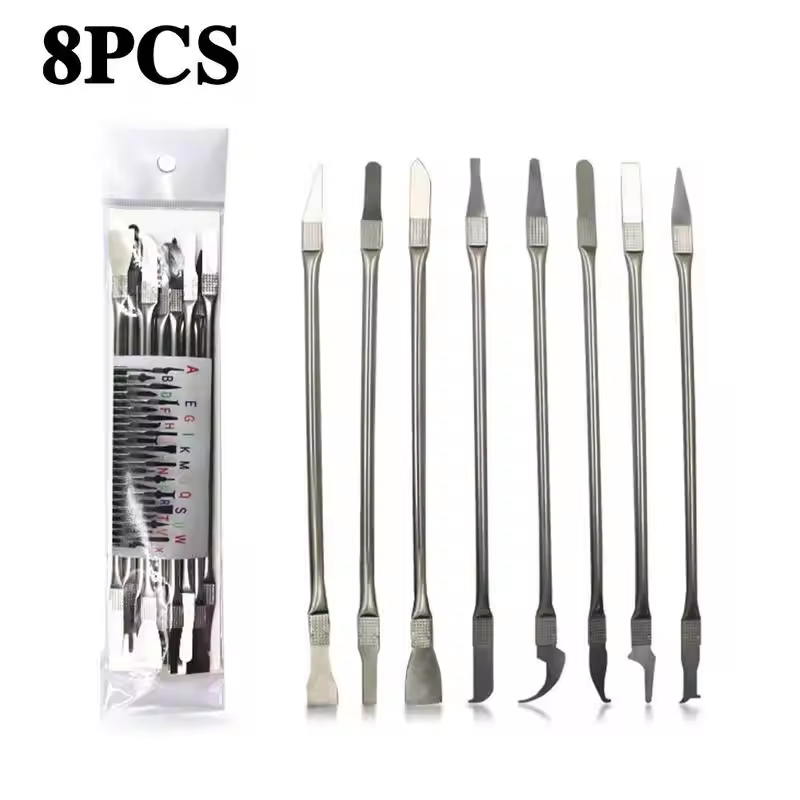
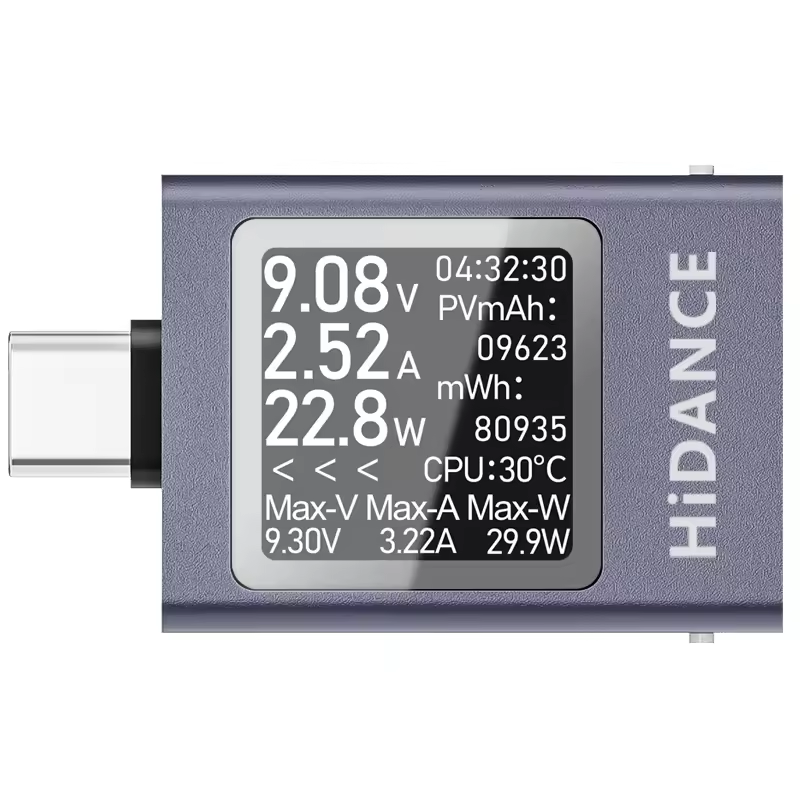
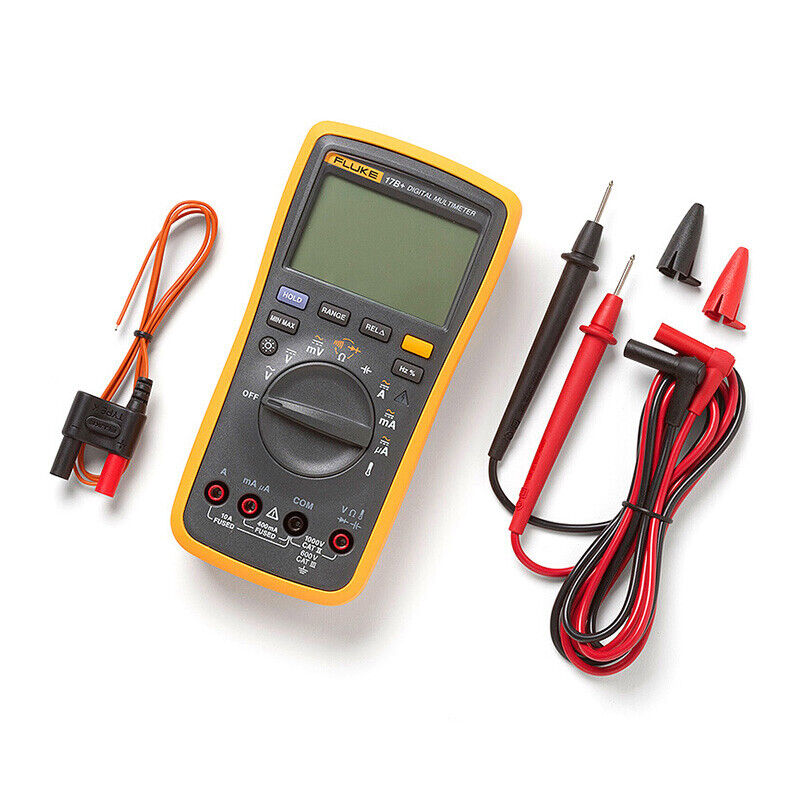
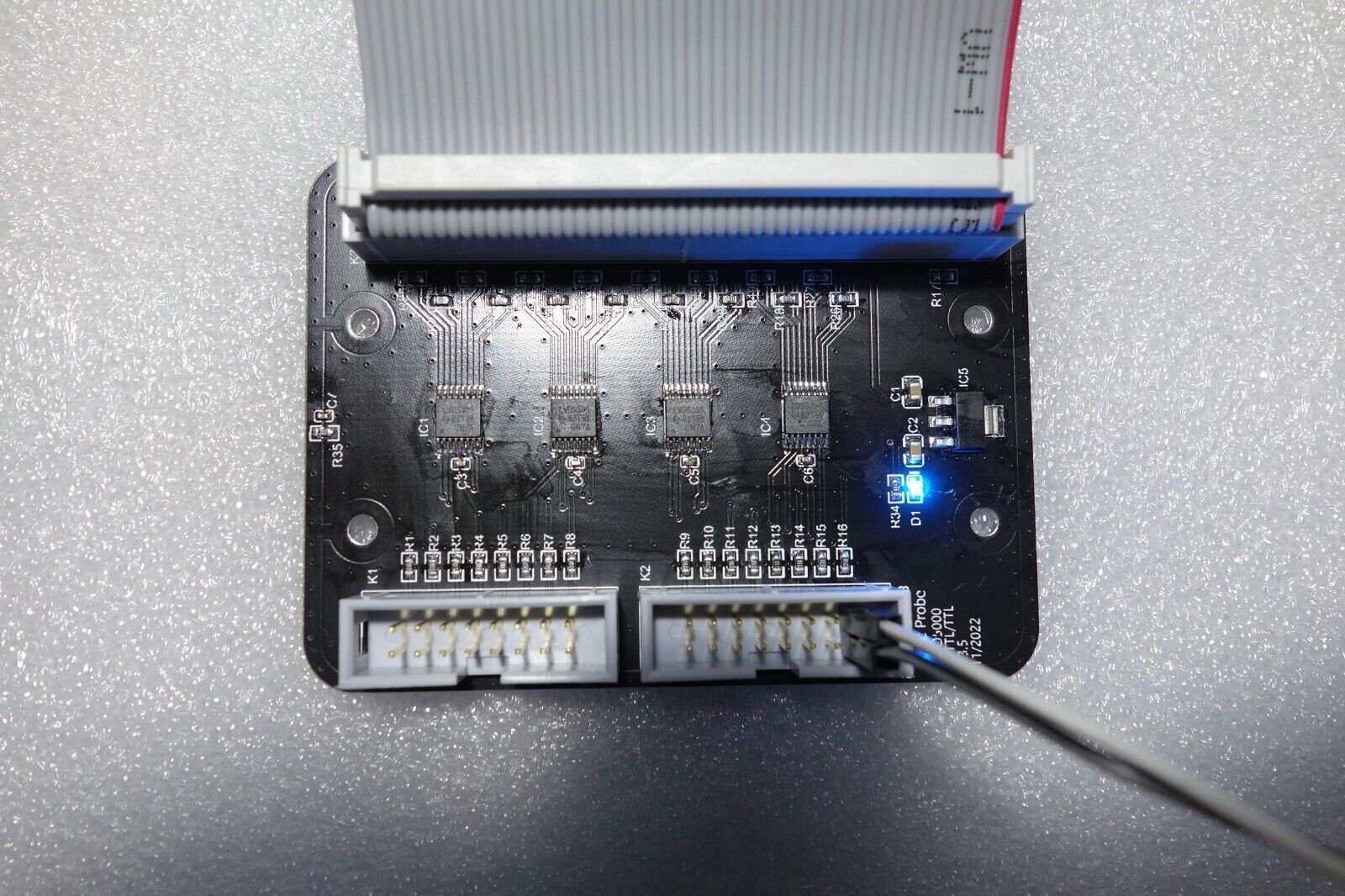
Following is a product I use picked at random from my collection which may appear in my videos. Clicking through on this to find and click on the green affiliate links before purchasing from eBay or AliExpress is a great way to support the channel at no cost to you. Thanks!
Silly Job Title: Current Conjurer. I am the Current Conjurer!
In this video we build a variable brightness LED for use as a circuit for testing an ammeter which we will be making next week as we continue through Learning the Art of Electronics. This circuit will draw between 3 and 18 mA which should meet our requirements.
This humble build shows how to make a simple circuit from components connected to each other with DuPont cables, no circuit board required. Using the DuPont cables allows us to make the circuit in the air first for assembly and testing then allowing it to be installed in the project box piece by piece after it has been tested.
During testing we discover a problem whereby the circuit doesn’t power on. Investigation with the voltmeter indicates the problem is in the wiring of the DC barrel power socket. Once that gets fixed the circuit works and is ready for installation.
The convention I used to help me remember what connects to what is that a male DuPont connection is for an output and a female DuPont connection is for an input; things which connect to each other will preferably have the same colour wire.
After testing I use heat shrink around the various leads and wires. I also use a number of different sizes of drill bit in order to make the holes in the project box for the DC barrel power in, LED, potentiometer, and banana sockets.
The DC barrel power in, potentiometer, and banana sockets are bolted in with washers and nuts, whereas the LED is held in place with hot glue. If I need to remove the LED in future isopropyl alcohol is the antidote for hot glue.
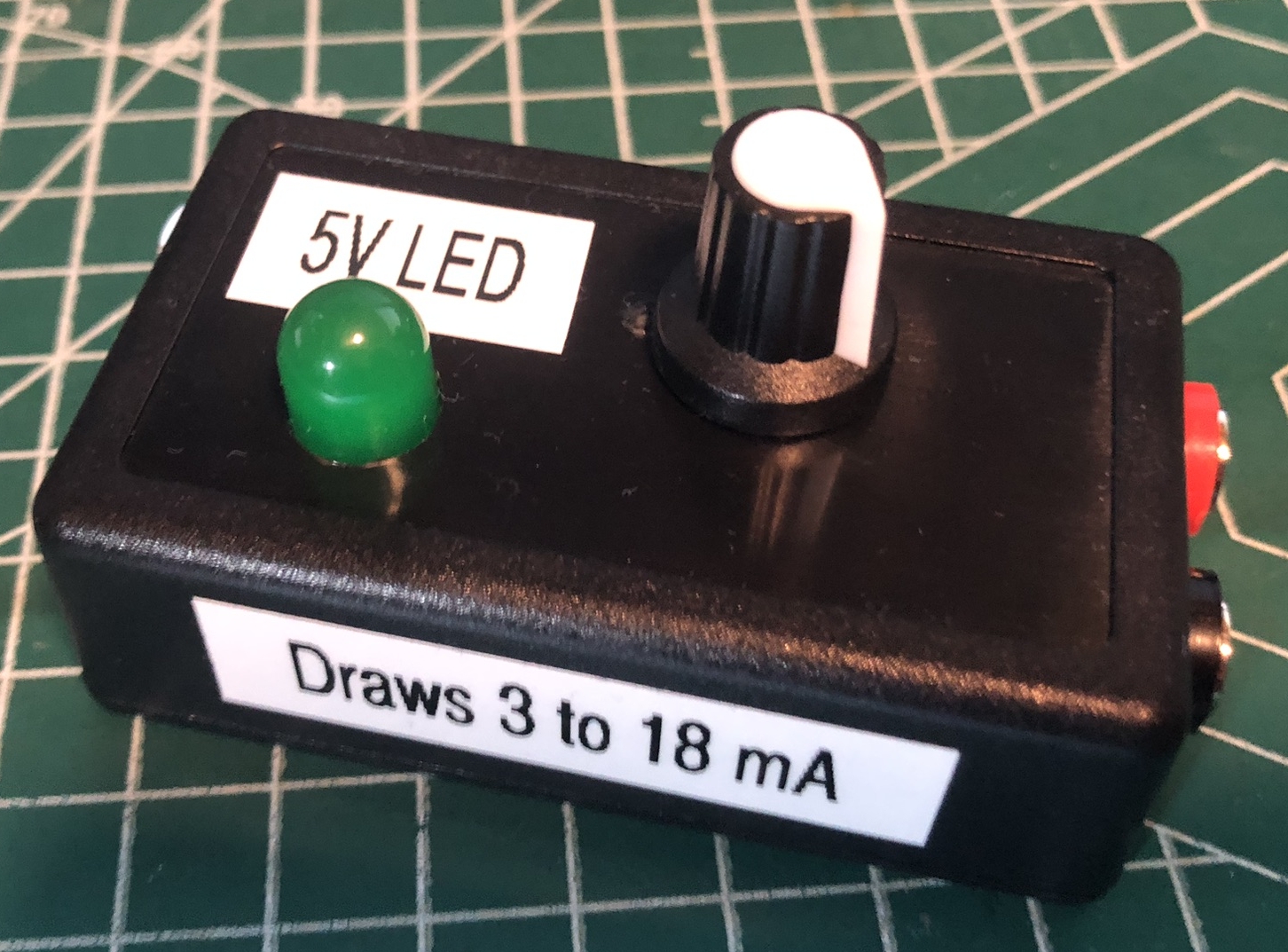
I labeled the box as “5V LED”, which should help me remember what this thing does so I can use it again in the future, should I find myself needing to draw a few milliamps in a pinch.
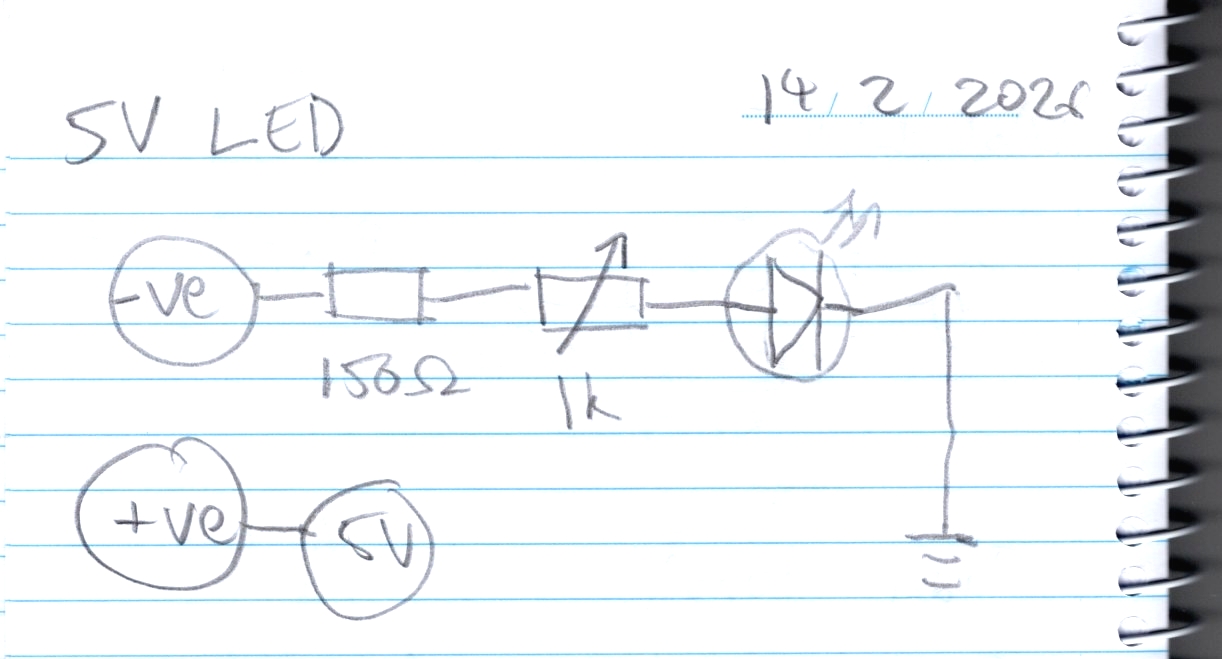
The circuit diagram looks something like this:
And the finished product looks something like this:
Thanks very much for watching! And please remember to hit like and subscribe! :)
p.s. today I added potentiometer, isopropyl, milliamps, multimeter, and tweezering to my spell check.
Following is a product I use picked at random from my collection which may appear in my videos. Clicking through on this to find and click on the green affiliate links before purchasing from eBay or AliExpress is a great way to support the channel at no cost to you. Thanks!
Silly Job Title: Grounding Genius. I am the Grounding Genius!
In this video we continue to work through our Maxitronix 30in1, today doing project #8: The Slow Motion Sunrise-Sunset Light. In this project we see how an electrolytic capacitor can control a Darlington pair.
We use the UNI-T UTi260B Thermal Imager to examine the thermal properties of the circuit (there’s not much to see).
Thanks very much for watching! And please remember to hit like and subscribe! :)
Following is a product I use picked at random from my collection which may appear in my videos. Clicking through on this to find and click on the green affiliate links before purchasing from eBay or AliExpress is a great way to support the channel at no cost to you. Thanks!
Silly Job Title: Systems Architect. I am the Systems Architect!
In this video we continue to work through our Maxitronix 30in1, today doing project #7: The Sunrise-Sunset Light. In this project we see how an electrolytic capacitor can control and NPN transistor. By varying the resistor and capacitor we can change the timings of the circuit.
Thanks very much for watching! And please remember to hit like and subscribe! :)
Following is a product I use picked at random from my collection which may appear in my videos. Clicking through on this to find and click on the green affiliate links before purchasing from eBay or AliExpress is a great way to support the channel at no cost to you. Thanks!
In the following table the values are computed for VS = 5V and I = 20mA.
Size
Colour
VF
VR
RS
10mm
RED
1.890
3.110
156
10mm
GREEN
2.030
2.970
149
10mm
BLUE
2.643
2.357
118
10mm
YELLOW
1.939
3.061
153
10mm
WHITE
2.615
2.385
119
5mm
RED
1.889
3.111
156
5mm
GREEN
1.995
3.005
150
5mm
BLUE
2.710
2.290
115
5mm
YELLOW
2.019
2.981
149
5mm
WHITE
2.775
2.225
111
VS
Supply voltage, e.g. 5 V.
I
Desired LED current in milliamps, e.g. 20 mA.
VF
Forward voltage, as measured; e.g. 1.8 V.
VR
Voltage across resistor = VS – VF.
RS
Series resistance to use, in Ohms = VR / I.
Thanks very much for watching! And please remember to hit like and subscribe! :)
Following is a product I use picked at random from my collection which may appear in my videos. Clicking through on this to find and click on the green affiliate links before purchasing from eBay or AliExpress is a great way to support the channel at no cost to you. Thanks!
Silly Job Title: Chief Fuse Blower. I am the Chief Fuse Blower!
In this video we continue to work through our Maxitronix 30in1, today doing project #3: The One-Way Street. In this project we learn a little more about diodes and LEDs.
Thanks very much for watching! And please remember to hit like and subscribe! :)
Following is a product I use picked at random from my collection which may appear in my videos. Clicking through on this to find and click on the green affiliate links before purchasing from eBay or AliExpress is a great way to support the channel at no cost to you. Thanks!
Thanks very much for watching! And please remember to hit like and subscribe! :)
Following is a product I use picked at random from my collection which may appear in my videos. Clicking through on this to find and click on the green affiliate links before purchasing from eBay or AliExpress is a great way to support the channel at no cost to you. Thanks!
In this video I have a third go at my Maker Faire “Here There Be Makers” badge. You can see my previous attempts here and here
Following is a product I use picked at random from my collection which may appear in my videos. Clicking through on this to find and click on the green affiliate links before purchasing from eBay or AliExpress is a great way to support the channel at no cost to you. Thanks!