There are cases for the Nano, but they’re not cheap: Zebra Classic Case for Arduino Nano.
Zebra Classic Case for Arduino Nano
Reply

There are cases for the Nano, but they’re not cheap: Zebra Classic Case for Arduino Nano.
So I followed these instructions to get my OLED display working on an Arduino Nano. I have a 0.96″ 128×64 I2C OLED display:
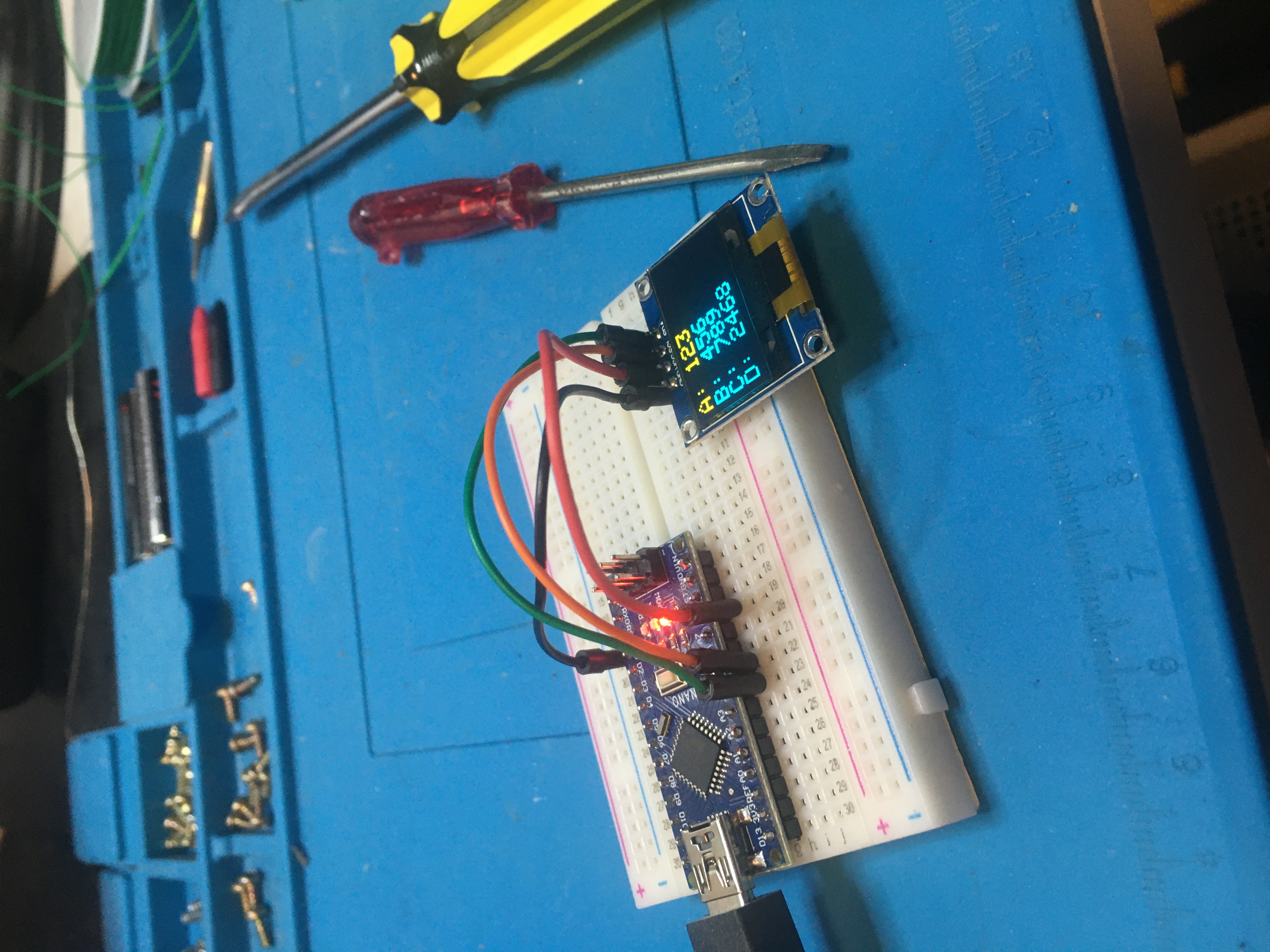
I’m planning to get a bunch of these: 0.56 Inch 7 Seven Segment 4 Digits Red Clock LED Display Common cathode Time 12 Pins. Then I need to figure out how to drive them from an Arduino Nano…
// 2022-09-24 jj5 – actually, these might be better: 0.91 inch OLED Module White/Blue OLED 128X32 OLED LCD LED Display Module 0.91″ IIC Communicate For Arduino ROHS Certification.
I have one of these: SparkFun Tiny AVR Programmer PGM-11801. I was thinking of getting another one or two for backup, but there’s probably no need at the moment.
Also I figured out how to put a programmer on my Pluggable ATTINY Development Board For ATtiny13A/ATtiny25/ATtiny45/ATtiny85 Programming Editor Micro Usb Power Connector (see that link for details).
On my wishlist: Full Feature THETA Robot for BBC micro:bit.
Here are two options for semiconductor analysis:
Also available in kit format: ATPK3 – Atlas Pro Pack – LCR45 + DCA75 + Case with the LCR45 – LCR Impedance Meter.
This isn’t super high quality content, and is basically just advertising, but what the hell. I’m not sure how regularly they get new content, but today on Maker Hub:
I found www.ldelectronics.com.au. Might try them out for PCB manufacture.
I think I’m gonna subscribe to Silicon Chip magazine. I’ve ordered the October issue in print format and the September issue in electronic format. Might get a 12 month print & digital subscription starting in January next year.
I found this PDF explaining sample rate considerations: What You Really Need to Know About Sample Rate. It’s mostly about how aliasing works and what you can do about it (employ an anti-aliasing low pass filter or oversample by as much as 10x).