You can support this channel on Patreon: patreon.com/JohnElliotV
This post is part of my video blog and you can find more information about this video.
Silly Job Title: Charge Charmer. I am the Charge Charmer!
In this video we continue working our way through Learning the Art of Electronics and continue working through 1W Worked Examples: DC circuits with 1W.3 Working around imperfections of instruments.
We use the Tenma 72-10505 Bench Power Supply for 20 V power.
We use the EEVblog BM2257 Digital Multimeter as our voltmeter (DVM).
We use the Pro’sKit MT-2207-C Analog Multimeter as our ammeter (VOM).
We use the Multicomp Pro MP701033 Resistor Decade Box as our variable resistor.
We use the Carpenter Mechanical Pencil to take notes.
We use the Hakko CHP 3C-SA Precision Tweezers for tweezering.
We use the Kaisi S-160 45x30cm Repair Mat as our workspace.
Thanks very much for watching! And please remember to hit like and subscribe! :)
p.s. today I added DVM and VOM to my spell check.
Following is a product I use picked at random from my collection which may appear in my videos. Clicking through on this to find and click on the green affiliate links before purchasing from eBay or AliExpress is a great way to support the channel at no cost to you. Thanks!
Yizhan Digital Microscope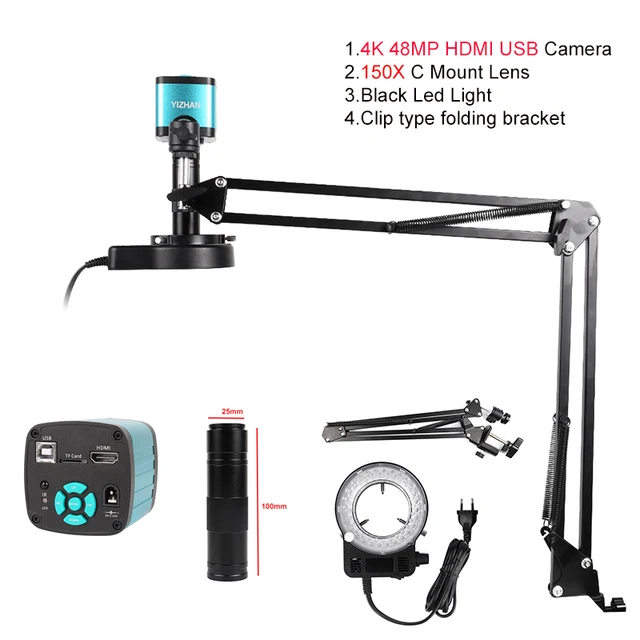 notes notes |
Let’s go shopping!