What is characteristic impedance?
Reply

You can support this channel: patreon.com/JohnElliotV
This post is part of my video blog and you can find more information about this video.
Silly Job Title: Wattage Warlock. I am the Wattage Warlock!
In this video we continue working through Learning the Art of Electronics. Today we build a voltage integrator
with a resistor and capacitor. There is an EveryCircuit simulation circuit over here: LAoE Fig-2N-12-B Voltage Integrator.
We use the Rigol MSO5074 Mixed Signal Oscilloscope to measure our input and output signals.
We use the Sharp EL-546L Scientific Calculator for calculations.
We use the Multicomp Pro MP701033 Resistor Decade Box as our variable resistor.
We use the Kaisi S-160 45x30cm Repair Mat as our workspace.
Using a 1 kΩ resistor and 1 µF capacitor we fed in a 1 kHz square wave:

And a 1 kHz sine wave:

Thanks very much for watching! And please remember to hit like and subscribe! :)
Following is a product I use picked at random from my collection which may appear in my videos. Clicking through on this to find and click on the green affiliate links before purchasing from eBay or AliExpress is a great way to support the channel at no cost to you. Thanks!
Swann & Morten 20pcs No.10 Scalpel Blade |
Let’s go shopping!
You can support this channel: patreon.com/JohnElliotV
This post is part of my video blog and you can find more information about this video.
Silly Job Title: Power Provider. I am the Power Provider!
In this video we do the 20th project from the Maxitronix 30in1 Electronics Project Lab Kit: The Wireless Rain Detector.
In this video I mention about my copy of Silicon Chip magazine which arrived today, check them out!
We use the Rigol MSO5074 Mixed Signal Oscilloscope to investigate our signals.
We use the EEVblog BM2257 Digital Multimeter to debug the power circuit.
We use the Multicomp Pro MP701033 Resistor Decade Box as our variable resistor.
We use the Kaisi S-160 45x30cm Repair Mat as our workspace.
Thanks very much for watching! And please remember to hit like and subscribe! :)
Following is a product I use picked at random from my collection which may appear in my videos. Clicking through on this to find and click on the green affiliate links before purchasing from eBay or AliExpress is a great way to support the channel at no cost to you. Thanks!
Wowstick Wowpad Magnetic Screwpad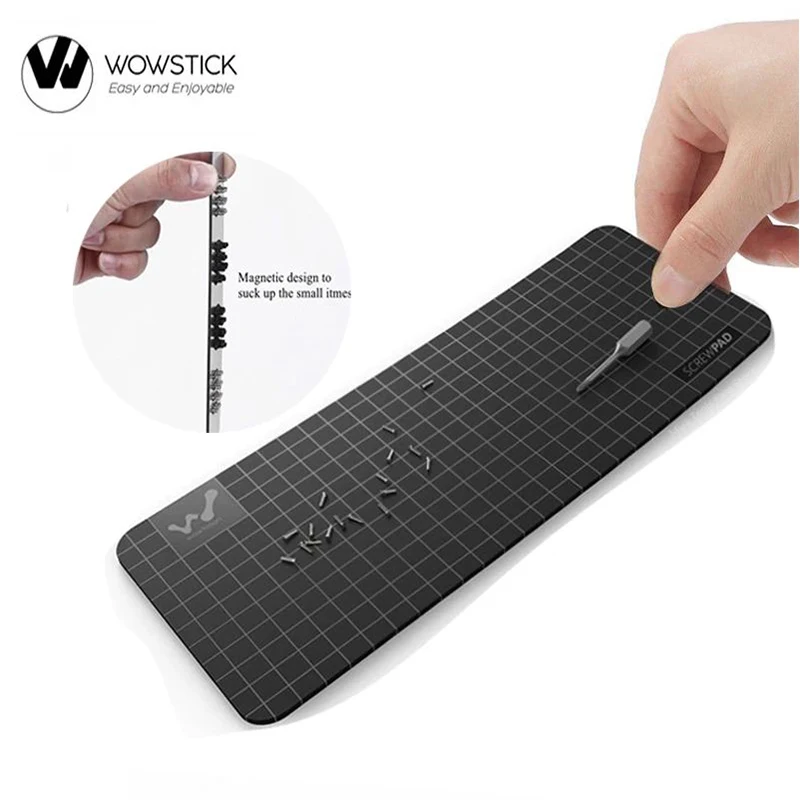 |
Let’s go shopping!
You can support this channel: patreon.com/JohnElliotV
This post is part of my video blog and you can find more information about this video.
Silly Job Title: Component Wrangler. I am the Component Wrangler!
In this video we continue working through Learning the Art of Electronics. Today we build a current integrator with a capacitor. Before we build our circuit we simulate it using EveryCircuit: LAoE Fig-2N-12-A Current Integrator.
We use the Rigol MSO5074 Mixed Signal Oscilloscope to investigate our waveforms.
We use the METCAL PS-900 Soldering Station for soldering.
We use the MUIN Solder Fume Extractor to clear the air.
We use the Riden RD6006 Bench Power Supply for constant current.
We use the Multicomp Pro MP701033 Resistor Decade Box as our variable resistor.
We use the Hakko CHP 3C-SA Precision Tweezers for tweezering.
We use the Plato Model 170 Wire Cutter to trim component leads.
We use the Kaisi S-160 45x30cm Repair Mat as our workspace.
Thanks very much for watching! And please remember to hit like and subscribe! :)
p.s. today I added EveryCircuit to my spell check.
Following is a product I use picked at random from my collection which may appear in my videos. Clicking through on this to find and click on the green affiliate links before purchasing from eBay or AliExpress is a great way to support the channel at no cost to you. Thanks!
Yum Cha 4pcs 30mm Deep Hole Pen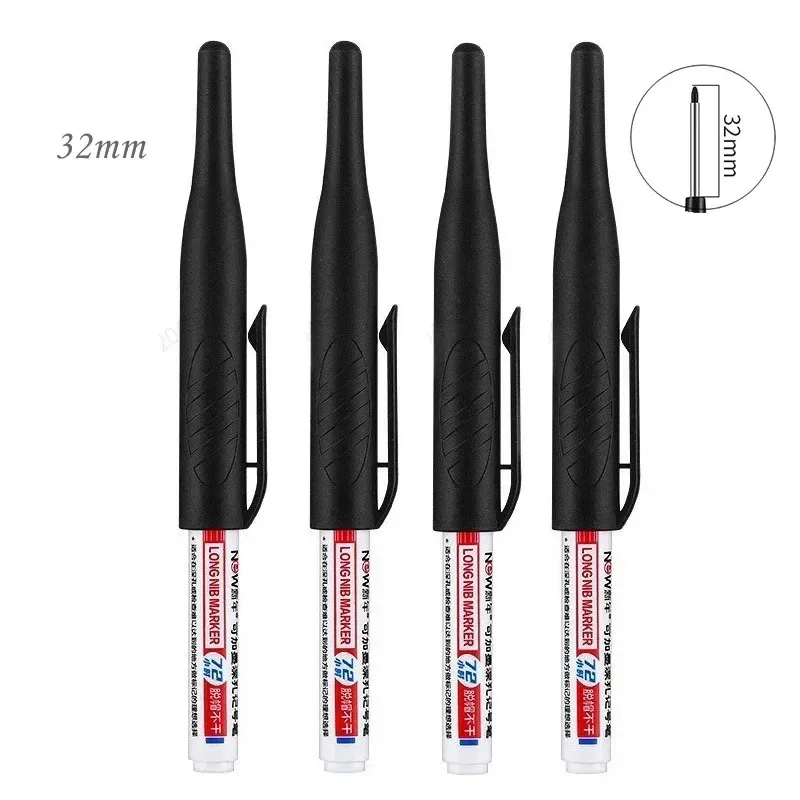 notes notes |
Let’s go shopping!
How to use QuickSort algorithm to find a median value.
Today while reading My temporary PHP fix from 2014 has nearly 20M installs. Today I’m deprecating it. I learned about PHP 8.5’s New URI Extension: A Game-Changer for URL Parsing.
More wisdom from John Teel.
Some interesting features.
His old Fluke 187 meter has a “nS” mode (nano-siemens) which can give crazy high resistance measurements (up to 100 GΩ) as conductance measurements.
His Fluke 87V has a low pass filter on its AC voltage input.
He explains Lo-Z mode and phantom voltage. It works by putting a thermistor across the input leads.
His old Tekpower TP8250 analog meter has a D.Ω range for measuring low resistances and a NULL mode for indicating voltage direction. His Sanwa EM7000 also has a NULL mode facility.
His Tekpower TP8250 also has a battery mode, which will measure the voltage from a battery with a load attached.
His ANENG AN870 has a Non-Contact Voltage sensing (NCV) mode which does what it says on the tin. My NCV device is a Fluke 1AC-C2-II VoltAlert Voltage Detector.